
Carnelian is the stone of warm, get-up-and-go energy. With its glowing orange-to-blood-red colour, it has been carved into seals, strung into necklaces and buried with pharaohs for thousands of years — and today it is one of the most popular crystals for creativity, courage and motivation. This guide covers what carnelian actually is, where its meaning comes from, the healing properties it is traditionally said to have, and how to tell real carnelian from dyed agate. If you want hands-on rituals and placement ideas, our companion guide how to use carnelian goes deeper into daily practice.

Carnelian at a Glance
- Mineral family: chalcedony (microcrystalline quartz), coloured by iron oxide
- Colour: translucent orange, red-orange, brownish-red; often softly banded
- Hardness: about 6.5–7 on the Mohs scale — durable enough for daily wear
- Chakras: sacral (primary), with links to the root and solar plexus
- Zodiac: most often linked with Leo, Aries and Virgo
- Keywords: creativity, courage, motivation, vitality, confidence
- Water safe? Yes, for a quick rinse; avoid long soaks and harsh chemicals
What Is Carnelian?
Carnelian is a variety of chalcedony, a form of quartz made of crystals so tiny they can only be seen under a microscope. That fine structure gives it its waxy, glassy lustre and its lovely translucency — hold a good piece up to a window and the light seems to glow through it like a coal. The orange and red colours come from traces of iron oxide (hematite and related minerals) dispersed through the stone. Deeper, browner pieces are sometimes sold as sard, and when carnelian forms in layers with white chalcedony it becomes sardonyx.
The name is usually traced to the Latin cornum, the cornelian cherry, whose translucent red fruit the stone resembles; an older folk etymology links it to carneus, “flesh-coloured”. You will still see both “carnelian” and “cornelian” spellings today. Major sources include India, Brazil, Uruguay, Madagascar and Indonesia.
A Short History of Carnelian

Few crystals have a history as long as carnelian’s. Etched carnelian beads made in the Indus Valley more than 4,000 years ago have been found as far away as Mesopotamia, where they were treasured trade goods. In ancient Egypt, carnelian was set into amulets, rings and funerary jewellery and was associated with the life-giving warmth of the sun and with protection in the afterlife — red stones such as carnelian were used for the tyet or “knot of Isis” amulet.
Romans loved carnelian for signet rings: wax does not stick to its smooth surface, which made it ideal for pressing seals onto letters and documents. Carved carnelian intaglios survive in museum collections across Europe. Later, Islamic tradition prized carnelian rings, and in medieval Europe the stone was worn in the belief that it gave the timid a bolder voice. That thread — carnelian as a stone of courage and confident speech — runs right through to modern crystal practice.
Carnelian Meaning and Symbolism
Symbolically, carnelian is fire in stone form. It is said to represent vitality, action and the courage to begin. Where rose quartz is associated with softness and amethyst with calm, carnelian is the stone people reach for when they want momentum — to start the project, speak up in the meeting or reconnect with a creative spark that has gone quiet.
Carnelian Healing Properties
The following properties come from crystal-healing tradition and are best understood as a focus for intention rather than a physical effect.
Creativity and inspiration
Carnelian is widely described as a muse stone. Artists, writers and makers keep it nearby in the belief that it helps ideas flow and makes it easier to push past a blank page. Its link with the sacral chakra — the energy centre traditionally tied to creativity and pleasure — is the root of this association.
Courage and confidence
Echoing its medieval reputation, carnelian is said to embolden. Many people carry a tumbled stone before a presentation, audition or difficult conversation. It pairs well with the stones in our guide to crystals for confidence.
Motivation and procrastination
If you tend to plan beautifully but struggle to start, carnelian’s “get going” energy is the reason it features in so many lists of crystals for productivity. Keep it on your desk alongside the stones in our crystals for focus guide — carnelian for the push, fluorite for the concentration.
Vitality and warmth
Carnelian is traditionally described as an energising, warming stone, and some people like to hold it on grey winter days or when they feel flat. Physically, it is still just a stone: it is lovely as a reminder to move, eat well and rest, but it does not replace any of those things.
Passion and relationships
Because of its red-orange fire, carnelian is also linked to passion, sensuality and playful connection. For gentler heart work, pair it with rose quartz, or see our full list of crystals for love and romance.
Crystal healing is a traditional and spiritual practice. The properties described here reflect folklore and belief, not scientific evidence. Crystals are not a substitute for medical or psychological care — please speak to a qualified professional about any health concern.
Carnelian and the Chakras
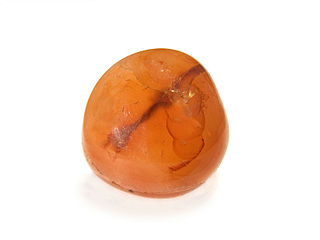
Carnelian is the classic sacral chakra stone. The sacral chakra, located just below the navel, is associated with creativity, emotion and enjoyment of life. Deeper red carnelian is also used for the root chakra (grounding and security), while brighter orange pieces are sometimes placed at the solar plexus for willpower. If you are new to chakra work, start with our overview of the 7 chakras.
Carnelian and the Zodiac
Modern crystal guides most often link carnelian with fiery Leo and Aries, whose natural boldness it is said to amplify, and with Virgo, where it is believed to loosen perfectionism and encourage action. Of course, anyone can use carnelian — zodiac pairings are a starting point, not a rule.
Crystals That Pair Well With Carnelian
- Citrine — sunny optimism plus carnelian’s drive; a classic abundance duo
- Sunstone — joy and self-belief to match carnelian’s courage
- Tiger’s eye — steady, grounded confidence
- Smoky quartz — grounds carnelian’s fire if it feels like too much
- Rose quartz — softens passion into warmth and self-kindness
- Clear quartz — said to amplify any intention you set
Looking to start your own piece? You can browse tumbled carnelian stones on Amazon — look for sellers who state the origin and whether the stones are heat-treated.
Real vs Fake Carnelian: How to Tell
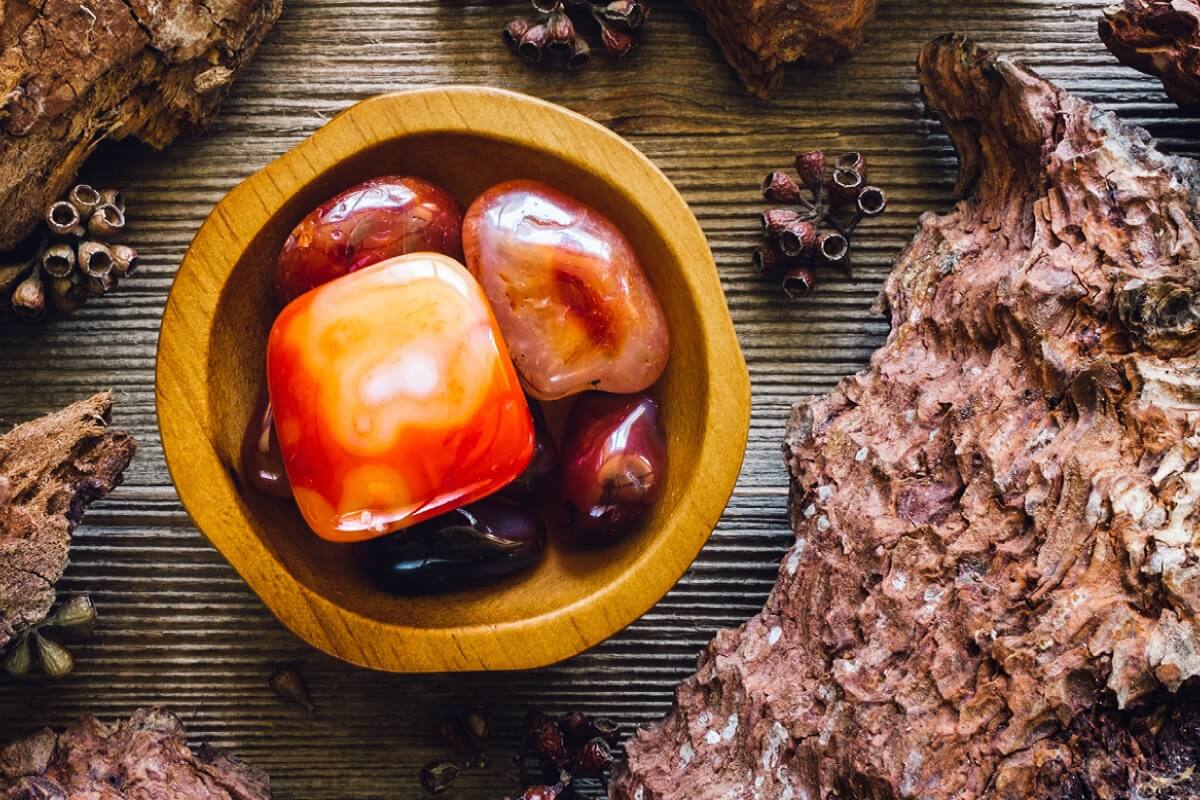
Carnelian is inexpensive, so outright fakes are less common than with rarer stones — but a large share of the carnelian on the market is actually grey or pale agate that has been dyed or heat-treated. Heating natural carnelian to deepen its colour is an old, accepted practice; dyeing is less desirable. A few checks help:
- Backlight it. Natural carnelian shows soft, cloudy colour distribution. Dyed agate often shows sharp, regular stripes with colour concentrated along the bands.
- Look in the cracks. Dye pools in fractures and drill holes, leaving darker lines.
- Watch for bubbles. Round internal bubbles and a perfectly uniform colour suggest glass.
- Check the price and wording. Terms like “red agate” or “carnelian agate” can signal treated material; ask the seller directly.
Treated carnelian still makes a perfectly nice stone to work with — the point is simply knowing what you are buying. Our guide on where to buy healing crystals covers what to ask any seller.
How to Care for Carnelian
Carnelian is hard and forgiving. Rinse it under lukewarm water and dry it with a soft cloth, or use smoke, sound or moonlight to cleanse it energetically — see how to cleanse your crystals for every method. Avoid harsh cleaners and long soaks for dyed pieces, which can leach colour. Many people like to recharge carnelian in morning sunlight, which suits its solar symbolism; a short session is fine, though strong sun over many hours may lighten some pieces.
Carnelian FAQ
What is carnelian good for?
In crystal tradition, carnelian is used for creativity, motivation, courage and vitality. It is one of the most popular stones for overcoming procrastination and for confidence before public speaking.
Can carnelian go in water?
Yes. At around 7 on the Mohs scale, natural carnelian handles a rinse without trouble. Keep dyed pieces out of long soaks.
Where should I put carnelian in my home?
Creative spaces, home offices and kitchens are traditional choices. In feng shui-inspired placement it is often set in the south area of a room, associated with fire and recognition. See also our crystals for your workspace guide.
Who should not wear carnelian?
There is no rule against it, but because carnelian is associated with stimulating energy, some practitioners suggest keeping it out of the bedroom if you find it hard to wind down. Choose a calmer stone for sleep instead.
Is carnelian the same as agate?
They are close relatives. Both are chalcedony; agate is the banded form, while carnelian is defined by its orange-red, iron-coloured translucency. Much commercial “carnelian” is heat-treated agate.
What is the difference between carnelian and red jasper?
Carnelian is translucent; red jasper is opaque and earthier. Red jasper is traditionally used for steady grounding, carnelian for fiery motivation.
How do I know if my carnelian is working?
Crystal work is personal and there is no measurable sign. Many people notice it simply as a helpful cue: seeing the stone reminds them of their intention to take one brave, creative step.
Ready to add some fire to your collection? A carnelian bracelet is an easy way to keep the stone with you all day.