

If you have been to a yoga class or browsed a wellness shop in the last few years, you have probably met palo santo: thin sticks of pale, sweet-smelling wood burned to cleanse a space. It is lovely. It is also one of the most misunderstood products in the spiritual wellness world, with confusing claims about whether it is endangered, where it comes from and whether you should be using it at all.
When we first wrote this article we repeated a claim, widespread at the time, that palo santo was critically endangered. The real picture is more nuanced, so we have rewritten this guide to give you the accurate version, explain why Zenluma still chooses not to use it, and share the alternatives we actually reach for. If you are specifically looking for ways to clear your crystals, our companion guide on cleansing crystals without palo santo covers stone-by-stone methods.
What Is Palo Santo?
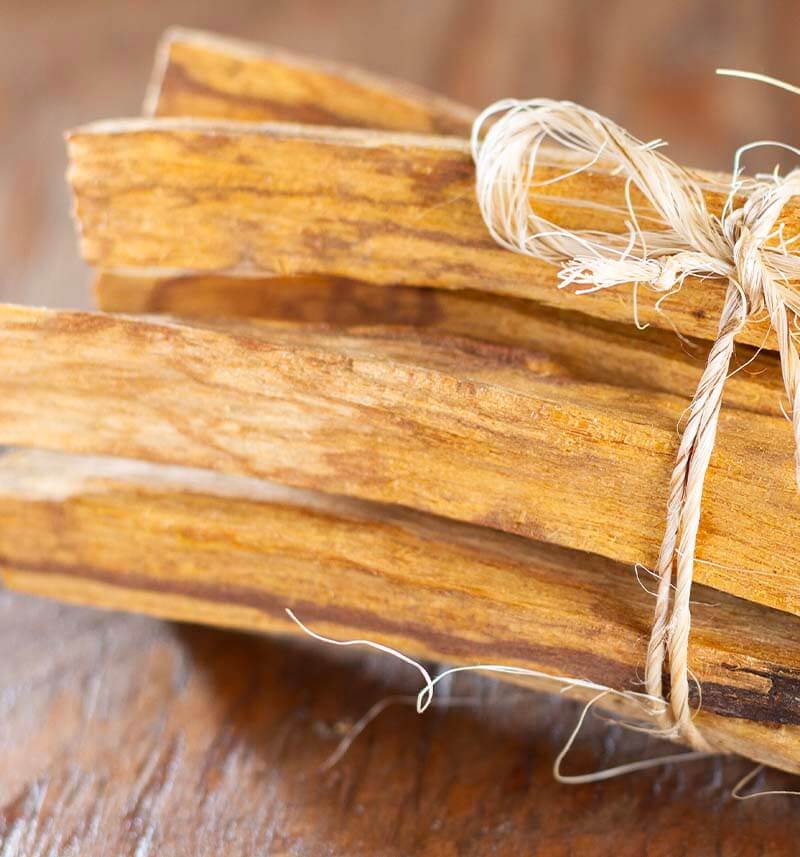
Palo santo means “holy wood” in Spanish. The wood sold for smudging comes from Bursera graveolens, a tree in the same family as frankincense and myrrh, native to the dry tropical forests of coastal Ecuador and Peru, with a range stretching into Central America and the Galápagos. Its scent comes from aromatic resins rich in limonene, which is why it smells citrusy, sweet and woody.
Indigenous and mestizo communities in South America have used palo santo for generations: burned to clear spaces and ward off bad energy, in folk medicine, as an insect repellent, and in ceremony. Its global popularity is much more recent, driven by wellness culture and social media from around the mid 2010s.

Is Palo Santo Endangered? The Honest Answer
This is where much of the internet (including our own older article) got it wrong. Here is what is actually known:
- Bursera graveolens is not globally endangered. The IUCN Red List assesses the species as Least Concern because it has a wide range. The “only a few hundred trees left” claim that circulated online does not hold up.
- There are two “palo santos”. Bulnesia sarmientoi, a different tree from the Gran Chaco region of Argentina, Paraguay and Bolivia, is also called palo santo. It has been heavily logged for timber and oil and is regulated under CITES Appendix II. Some of the “endangered” confusion comes from mixing the two up.
- Local populations are under pressure. The dry forests where Bursera graveolens grows are among the most threatened habitats in South America, and demand for the wood adds to that pressure.
- Ethical harvesting depends on law and trust. Responsible suppliers collect only naturally fallen wood that has dried for several years, which is when the aromatic oils develop. Peru restricts harvesting to dead fallen wood under permit. The problem is that buyers cannot easily verify this from a stick in a bag.
So the accurate summary is: palo santo is not about to disappear, but its supply chain is hard to verify and its habitat is fragile. That is a reason for care, not panic.
Why Zenluma Still Chooses Not to Use It
Even with the corrected facts, we prefer to leave palo santo out of our own practice, for three reasons:
- Traceability. Most palo santo sold online carries no information about who harvested it, whether it was fallen wood, or whether harvesters were paid fairly. If you cannot trace it, you cannot be sure it is ethical.
- Cultural respect. For many communities palo santo is a sacred material. When it becomes a mass-market trend, local people can be priced out of something that belongs to their tradition, and the meaning gets flattened into an aesthetic.
- You do not need it. The intention behind a cleansing ritual matters far more than the specific plant. Plenty of locally grown, easily sourced alternatives do the same job beautifully.
If you do choose palo santo, buy from sellers who name their source, confirm the wood is naturally fallen, and ideally support the communities who harvest it. Treat it as a special-occasion material rather than an everyday consumable.
Smudging, Smoke Cleansing and Cultural Context
It helps to separate two ideas. Smudging specifically refers to ceremonial practices of certain Indigenous North American nations, often involving white sage, sweetgrass or cedar. Smoke cleansing is the much broader, near-universal human practice of burning fragrant plants to purify a space, found everywhere from church incense to Japanese temple sticks to European herb bundles. We cover the history in depth in our ultimate guide to sage smudging and the practical steps in smudging for beginners.
Using a plant from your own region or heritage is one of the simplest ways to practise smoke cleansing respectfully.
Ethical Alternatives to Palo Santo
Each of these is widely grown, inexpensive and has its own long tradition of cleansing use. Scent notes are given so you can find one you love.
Garden Sage (Salvia officinalis)
Not to be confused with white sage, common culinary sage is grown in gardens worldwide. It burns cleanly with a warm, herbal scent and has been used for purification in European folk tradition for centuries.
Rosemary
Rosemary was burned in medieval homes and hospitals to clear the air, and in folklore is linked to memory and protection. It smells fresh, piney and slightly camphorous. Bundle dried sprigs with cotton thread.
Lavender
Soft, floral and relaxing, lavender is lovely for bedrooms and evening rituals. Dried stems burn quickly, so combine them with rosemary or sage for a longer-lasting bundle.
Cedar and Juniper
Both have long purification traditions in many cultures, including Scottish “saining” with juniper. Expect a crisp, woody, forest scent, the closest match to palo santo’s woodiness.
Mugwort
A common hedgerow plant with a sage-like scent, mugwort is traditionally associated with dreams and intuition. Avoid it if you are pregnant.
Resins: Frankincense, Myrrh and Copal
Burned on a charcoal disc, these resins give rich, sweet smoke. Frankincense is a botanical cousin of palo santo, so it shares some of the same warm, citrusy notes. Look for sustainably sourced frankincense resin from suppliers who disclose origin, since some frankincense species face harvesting pressure too.
Want the palo santo scent without the wood? Many people find a blend of frankincense, sweet orange and a little cedarwood essential oil in a diffuser comes surprisingly close.
Smoke-Free Ways to Cleanse a Space

Smoke is not the only way. These options are ideal for apartments, smoke alarms, children, pets and anyone with sensitive lungs:
- Sound: a singing bowl, bell or simply clapping in each corner of a room.
- Crystals: a selenite wand by the door, or black tourmaline in the corners, both traditionally used for clearing and protection.
- Room sprays: water with a few drops of rosemary, lavender or cedar essential oil (and a little alcohol to disperse).
- Salt: small bowls of salt in corners for a day, then discarded.
- Fresh air and sunlight: open every window for ten minutes. Many traditions treat light and moving air as the oldest cleansers of all.
For a full room-by-room clearing plan, see 9 ways to remove negative energy from your home. Our crystal cleansing guide covers the stones themselves.
A Simple Palo-Santo-Free Cleansing Ritual
- Open a window so stale energy (and any smoke) has somewhere to go.
- Light a rosemary or garden sage bundle, or ring a bell if you prefer smoke-free.
- Start at the front door and move clockwise through each room, paying attention to corners and doorways.
- As you move, repeat a simple intention such as “I clear this space and welcome calm.”
- Finish by placing a selenite or clear quartz piece near the entrance.
- Extinguish the bundle fully in sand or a fireproof bowl, never by leaving it to smoulder.
Frequently Asked Questions
Is palo santo endangered?
Bursera graveolens, the tree sold as palo santo for smudging, is listed as Least Concern by the IUCN. A different tree also called palo santo, Bulnesia sarmientoi, is regulated under CITES. The bigger concerns are unverifiable sourcing and pressure on fragile dry-forest habitats.
Is it cultural appropriation to burn palo santo?
Opinions differ. Many people feel it is respectful to buy only traceable, fairly sourced wood, learn its cultural background and avoid treating it as a trend. Choosing plants from your own region sidesteps the question entirely.
What smells most like palo santo?
Frankincense resin is the closest natural match, since the two trees are related. Cedarwood and sweet orange add the woody, citrus notes.
How do I know if palo santo is ethically sourced?
Look for sellers who name the country and community of origin, state that the wood is naturally fallen and aged, and hold any required permits. Vague listings with no origin information are a red flag.
Can I cleanse crystals without smoke?
Yes. Sound, moonlight, selenite and (for hard stones) running water all work. See how to cleanse crystals without palo santo.
Is burning palo santo or sage bad for your lungs?
Any smoke contains fine particles. Keep sessions short, ventilate well, and choose smoke-free methods if you have asthma or keep birds.
This article shares traditional and spiritual practices for general interest only. Burning any plant material produces smoke; if you have asthma or another respiratory condition, are pregnant, or keep birds or other sensitive pets, choose a smoke-free method and ask a health professional if unsure.