
Rhodochrosite is one of the most striking pink stones in the crystal world — raspberry red to soft rose, often swirled with pale bands like a slice of candy. Known in Argentina as Rosa del Inca, the “Inca Rose”, it is treasured in crystal tradition as a stone of self-love, emotional healing and joy. This guide covers what rhodochrosite really is, where its meaning comes from, its traditional healing properties, how it differs from rhodonite, and how to care for a stone that is softer than most.
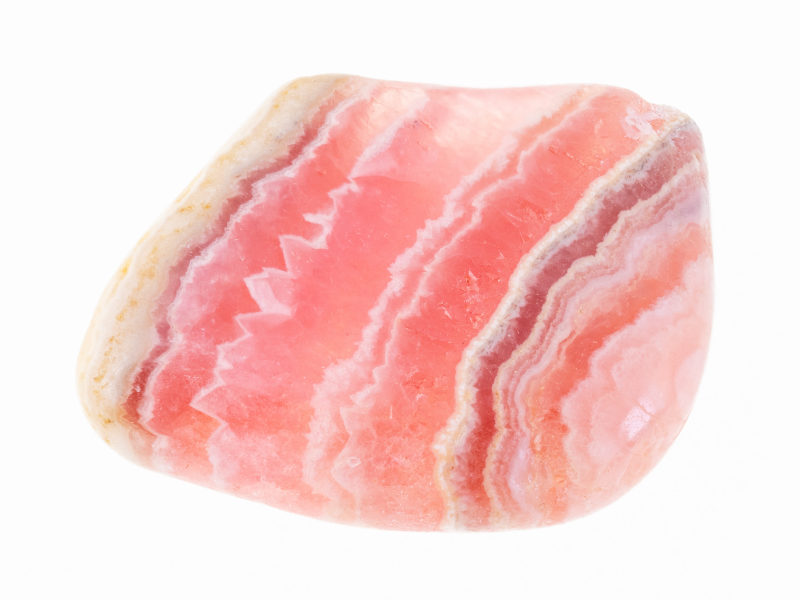
Rhodochrosite at a Glance
- Mineral: manganese carbonate (MnCO₃), part of the calcite group
- Colour: rose pink to raspberry red, often banded with lighter pink or white
- Hardness: 3.5–4 on the Mohs scale — soft and easily scratched
- Chakras: heart (primary) and solar plexus
- Zodiac: most often linked with Leo and Scorpio
- Keywords: self-love, compassion, emotional healing, joy, the inner child
- Water safe? Not for soaking — wipe clean instead
What Is Rhodochrosite?
Rhodochrosite is a manganese carbonate mineral — the manganese is what gives it its pink-to-red colour. Its name, coined in 1813, comes from the Greek rhodon (rose) and chroma (colour). It forms in two very different ways. In hydrothermal veins it can grow as rare, glassy, cherry-red crystals, the most famous of which come from the Sweet Home Mine in Colorado; rhodochrosite is Colorado’s official state mineral. In old mine workings and cavities it also builds up slowly as stalactites and crusts, creating the banded pink-and-white material most people know from tumbled stones, beads and polished slabs.
The classic banded material comes from Argentina, especially the Capillitas area of Catamarca, where it has been mined for centuries. Argentina regards rhodochrosite as its national gemstone. Other sources include Peru, South Africa, Mexico and China.
The Legend of the Inca Rose
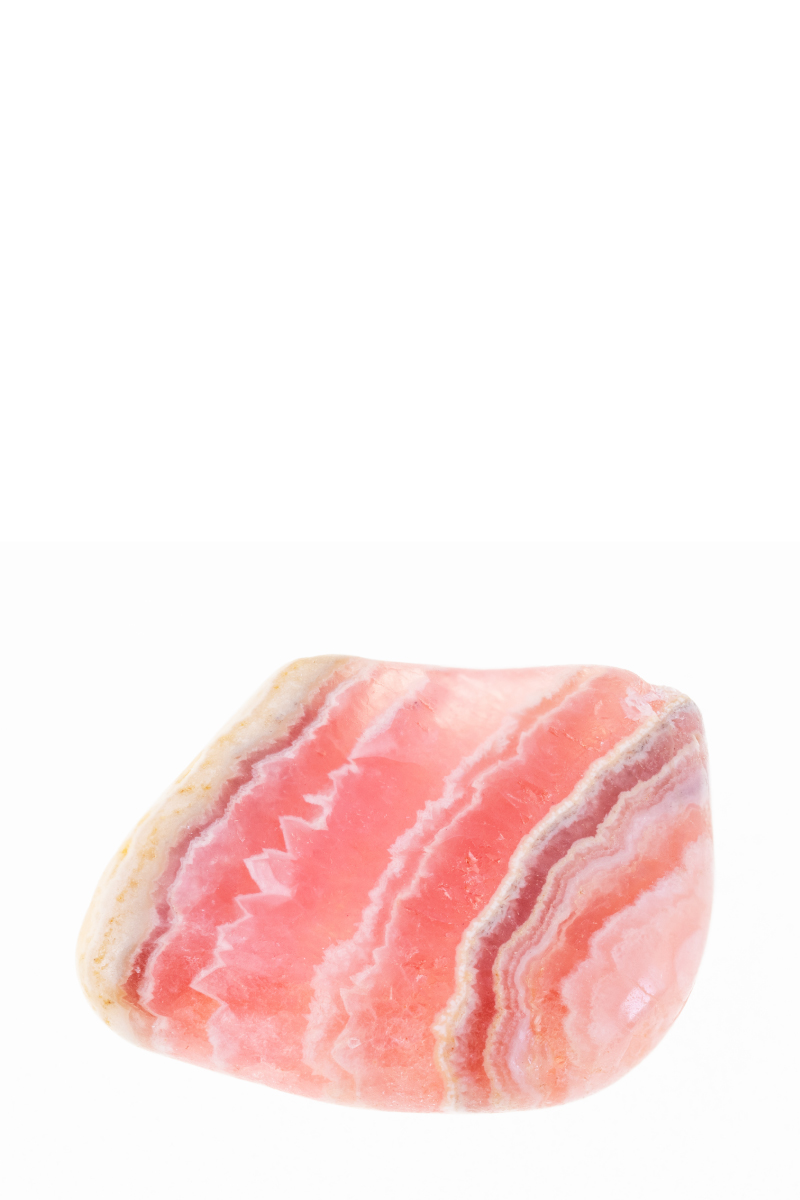
Argentine folklore tells that rhodochrosite formed from the blood of ancient Inca rulers, turned to stone in the mountains — hence the name Rosa del Inca. It is a legend rather than documented Inca practice (large-scale mining of the Capillitas deposits came later), but it has shaped the stone’s identity: rhodochrosite is thought of as a stone of the heart, carrying love, loss and memory together.
Rhodochrosite Meaning and Symbolism
If rose quartz is the gentle stone of unconditional love, rhodochrosite is often described as its more active, compassionate cousin. Where rose quartz soothes, rhodochrosite is said to help you look at old hurts, forgive them and move toward joy. It is associated with self-worth, warmth, playfulness and reconnecting with the “inner child” — the part of you that remembers how to enjoy things for their own sake.
Rhodochrosite Healing Properties
These are traditional and spiritual associations, offered as a focus for reflection rather than a physical remedy.
Self-love and self-worth
Rhodochrosite appears on almost every list of stones for self-love. It is said to encourage kinder self-talk and a sense of being worthy of care. For a full practice, see our guide to crystals for self-love.
Emotional healing and forgiveness
Many practitioners use rhodochrosite when working through old emotional wounds or heartbreak. It is believed to help people acknowledge painful feelings without being swallowed by them. It sits well alongside the stones in our guide to crystals for grief.
Joy and playfulness
Its bright, candy-like colour has made rhodochrosite a symbol of lightheartedness. It is sometimes called a stone for people who take everything too seriously — a reminder to rest, play and laugh.
Love and relationships
Rhodochrosite is associated with warm, compassionate love — including the capacity to receive love, not only give it. See our list of crystals for love and romance for pairings.
Anxiety and emotional overwhelm
Some people hold rhodochrosite when feelings run high, in the belief that it steadies the heart. For anxiety specifically, our guide to calming crystals for anxiety has more options.
Crystal healing is a traditional and spiritual practice. The properties described here reflect folklore and belief, not scientific evidence. Crystals are not a substitute for medical or psychological care — please speak to a qualified professional about any health concern.
Rhodochrosite and the Chakras
Rhodochrosite is primarily a heart chakra stone. The heart chakra, at the centre of the chest, is associated with love, compassion and connection, and it is traditionally linked with both green and pink stones. Because of rhodochrosite’s warmer, orange-red tones, many practitioners also connect it with the solar plexus, the seat of self-esteem — a natural fit for a stone of self-worth. Learn more in our overview of the 7 chakras and our guide to healing chakras with crystals.
Rhodochrosite and the Zodiac
Rhodochrosite is most often paired with Leo — big-hearted, warm and playful — and with Scorpio, where it is said to soften intensity and support forgiveness. Some guides also suggest it for Cancer, the sign most associated with home and feelings.
Rhodochrosite vs Rhodonite: What’s the Difference?
These two pink stones share a Greek root and both contain manganese, so they are constantly confused. The differences are easy to learn:
- Composition: rhodochrosite is a manganese carbonate; rhodonite is a manganese silicate.
- Look: rhodochrosite has pink-and-white or pink-and-red banding; rhodonite is pink with black veins and patches of manganese oxide.
- Hardness: rhodochrosite is soft (3.5–4); rhodonite is much harder (about 5.5–6.5).
- Tradition: rhodochrosite is linked with joy and self-love; rhodonite with emotional balance, grounding and forgiveness.
How to Use Rhodochrosite
- Heart meditation: lie down with a stone over your heart and breathe slowly for five to ten minutes, repeating a kind phrase to yourself.
- Journaling companion: hold it while writing about an old hurt, then write one sentence of forgiveness — for someone else or for yourself.
- Pendant: a pendant resting near the heart keeps its symbolism close (choose a protective setting; it scratches easily).
- Bedside or living room: its gentle colour suits calm spaces; pair with amethyst from our crystals for sleep guide for evenings.
- Self-love altar: combine with rose quartz, a candle and a written affirmation.
Rhodochrosite is pricier than rose quartz, so many people start with a small tumbled rhodochrosite stone or a single pendant.
Crystals That Pair Well With Rhodochrosite
- Rose quartz — the classic self-love partnership
- Amethyst — calm and perspective during emotional work
- Moonstone — emotional flow and new beginnings
- Smoky quartz — grounding when feelings run strong
- Sunstone — joy and self-belief
How to Care for Rhodochrosite

Rhodochrosite needs more gentleness than most crystals. At 3.5–4 on the Mohs scale it scratches easily, and as a carbonate it reacts with acids — even vinegar or lemon juice can etch it. Follow these rules:
- No soaking and no salt. Wipe with a soft, slightly damp cloth and dry immediately.
- No ultrasonic cleaners or heat. It can crack.
- Store it separately in a soft pouch, away from harder stones like quartz.
- Limit strong sun — prolonged exposure may dull its colour.
- Do not use it in gem elixirs or drinking water.
For energetic cleansing, choose gentle methods: smoke, sound, moonlight or resting it near selenite. Our guide on how to cleanse your crystals covers each one.
How to Spot Fake Rhodochrosite
- Dyed stones: dyed howlite, magnesite or calcite are sometimes sold as rhodochrosite. Look for colour pooled in cracks and a flat, uniform pink.
- Wrong banding: real banded rhodochrosite shows curving, layered bands in several shades of pink; perfectly even colour is suspicious.
- Too hard? If a stone sold as rhodochrosite has black veins and resists scratching, it may be rhodonite instead.
- Glass and resin: bubbles, a warm plastic feel or a very low price on large pieces are red flags.
- Buy from sellers who disclose treatment — see our tips on where to buy healing crystals.
Rhodochrosite FAQ
What is rhodochrosite good for?
In crystal tradition it is used for self-love, compassion, emotional healing, forgiveness and joy. It is one of the best-known heart chakra stones.
Can rhodochrosite go in water?
A quick wipe with a damp cloth is fine, but do not soak it. It is soft, can be damaged by salt and acids, and should never be used in drinking water.
Can I wear rhodochrosite every day?
Pendants and earrings are fine for daily wear. Rings and bracelets take more knocks, so they scratch faster; remove them for chores, the gym and washing up.
Is rhodochrosite rare?
Banded rhodochrosite is widely available and moderately priced. Fine transparent red crystals, like those from Colorado, are rare and expensive collector pieces.
Rhodochrosite or rose quartz: which should I choose?
Rose quartz is traditionally the gentle, soothing choice and is harder and cheaper. Rhodochrosite is associated with more active emotional healing and joy. Many people use both together.
Where should I place rhodochrosite in my home?
Bedrooms, reading corners and anywhere you rest or reflect. Keep it away from bathrooms and kitchens, where moisture and acidic splashes can damage it.
Which zodiac sign is rhodochrosite for?
It is most often linked with Leo and Scorpio, sometimes Cancer — but anyone drawn to it can use it.
Ready to invite some Inca Rose into your life? A rhodochrosite pendant keeps this heart stone close every day.