
Low moods have a way of shrinking the world. Days blur, small tasks feel enormous, and the things that usually bring comfort stop reaching you. If you are moving through a heavy stretch, this guide is a gentle companion — not a cure. Healing crystals for depression are best understood as quiet anchors: objects that give your hands something to hold, your eyes something beautiful to rest on, and your day a small, repeatable ritual when motivation is nowhere to be found.
Depression is a serious medical condition, and crystals are not a treatment for it. What a crystal practice can offer is structure, sensory comfort and a moment of intentional self-care — the kind of small daily act that therapists often encourage alongside professional treatment. Keep that framing, and the stones below become genuinely useful.
This article is for general information only and is not medical advice. Crystal healing is a traditional practice with no proven medical effect. If you are struggling with depression, please speak to a doctor or a mental health professional. If you are in crisis, contact your local emergency services or a crisis line such as 988 (US Suicide & Crisis Lifeline).
How Are Crystals Said To Help With Low Mood?
There is no scientific evidence that crystals alter brain chemistry or treat depression. What people describe, again and again, is subtler and more human: the practice around the stone helps. Traditional crystal healing holds that every mineral carries a steady vibration, and that sitting with one invites your own energy to settle. Modern practitioners tend to describe the same experience in plainer terms — a focal point for mindfulness.
Three practical reasons a stone can earn a place in a low-mood toolkit:
- It asks almost nothing of you. On the days when a walk or a phone call feels impossible, holding a stone for two minutes is achievable. Tiny wins matter.
- It is a physical anchor. Weight, temperature and texture pull attention into the body and out of a spiral of thought — the same principle behind grounding techniques used in therapy.
- It builds a ritual. Placing a crystal on the nightstand each evening creates rhythm, and rhythm is one of the first things depression erodes.
If you are new to the practice, our guide to how to use healing crystals and crystals for beginners will get you started in ten minutes.

The 9 Best Healing Crystals For Depression
1. Amethyst — For Restless Nights And A Loud Mind
Amethyst is the classic soothing stone and, for good reason, the one most people reach for first. Its violet colour is associated with the Crown and Third Eye chakras, and it is traditionally said to quiet mental chatter and invite restorative sleep. Because disturbed sleep and depressed mood feed each other, a stone that supports your wind-down routine is doing meaningful work.
Try this: keep a tumbled amethyst on the nightstand and hold it for the last minute before the light goes out. More ideas in our guide to crystals for sleep.
2. Rose Quartz — For Self-Compassion
Depression is often cruel in the voice it uses. Rose quartz is the stone of the Heart chakra, believed to soften self-criticism and open the way to gentleness — including gentleness towards yourself. Practitioners recommend it when the hardest relationship to repair is the one you have with you.
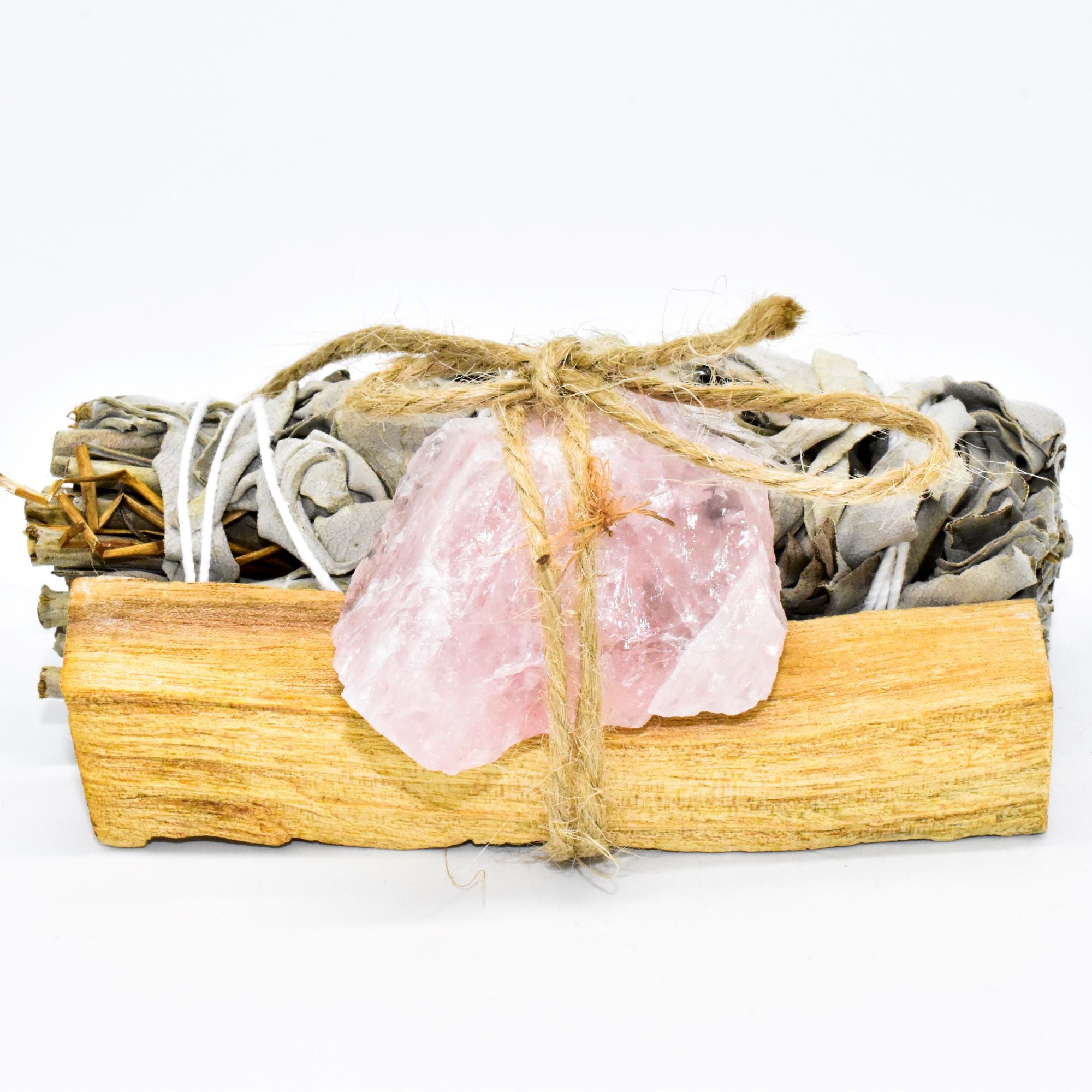
Try this: hold it over your heart, breathe out slowly, and name one thing you did today. Not achieved — did. Getting up counts.
3. Citrine — For Days With No Light In Them
Citrine carries the colour of sunlight and is traditionally linked to the Solar Plexus chakra, the seat of will and self-worth. It is the stone people reach for when they want to remember warmth exists. Genuine citrine is usually pale, smoky-golden; the deep orange stones sold cheaply are typically heat-treated amethyst.

4. Lepidolite — The Lithium Stone
Lepidolite is a lilac mica that genuinely contains trace lithium, which is why it earned the nickname “the peace stone”. To be clear: touching a mineral does not deliver lithium to your body, and lepidolite is not a substitute for medication. But it is deeply associated in crystal tradition with emotional balance and easing transitions, and it is beautiful to hold — it flakes softly and shimmers.
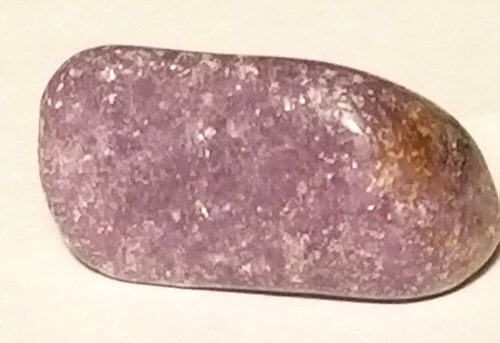
Keep lepidolite out of water; the layered mica structure degrades.
5. Smoky Quartz — For Heaviness You Want To Put Down
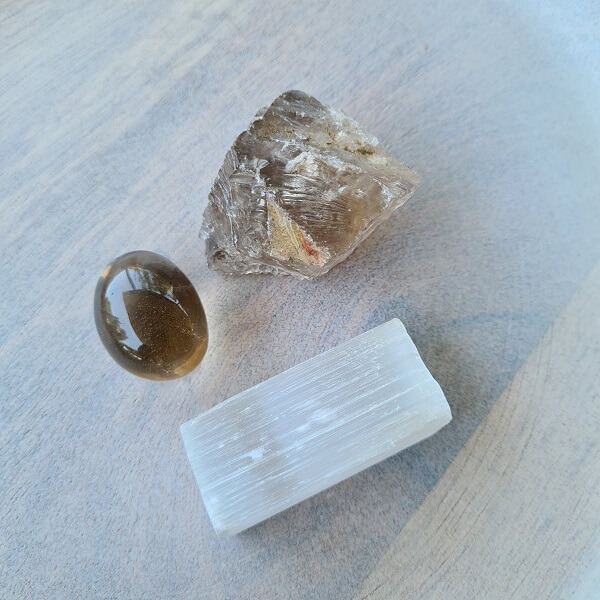
Smoky quartz is the grounding stone of the group, said to draw off dense, stagnant energy and return it to the earth. When you feel weighed down rather than anxious, this is often the more useful stone. It pairs well with time outdoors.
6. Sunstone — For Motivation And Optimism
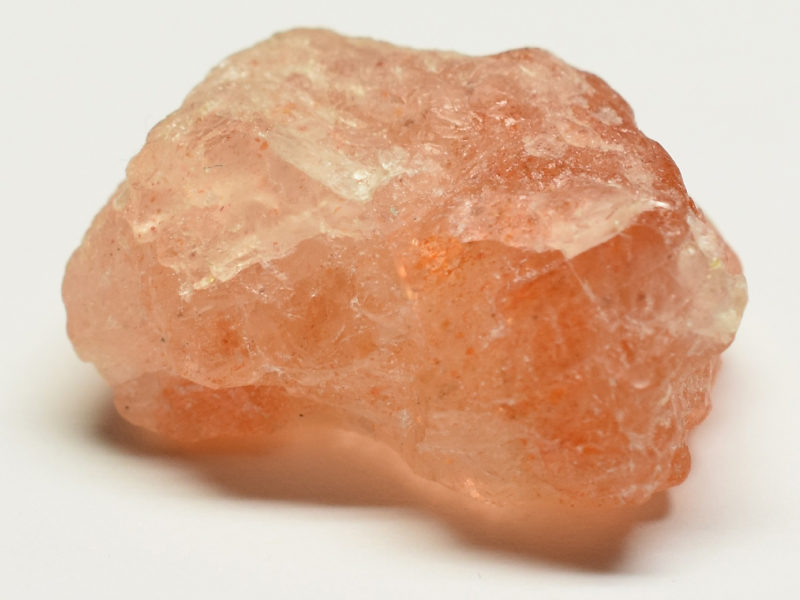
Sunstone’s copper-flecked glitter has always been tied to joy, vitality and leadership. Crystal tradition treats it as an antidote to apathy: a stone to keep on the desk when you want to begin something rather than simply survive the day.
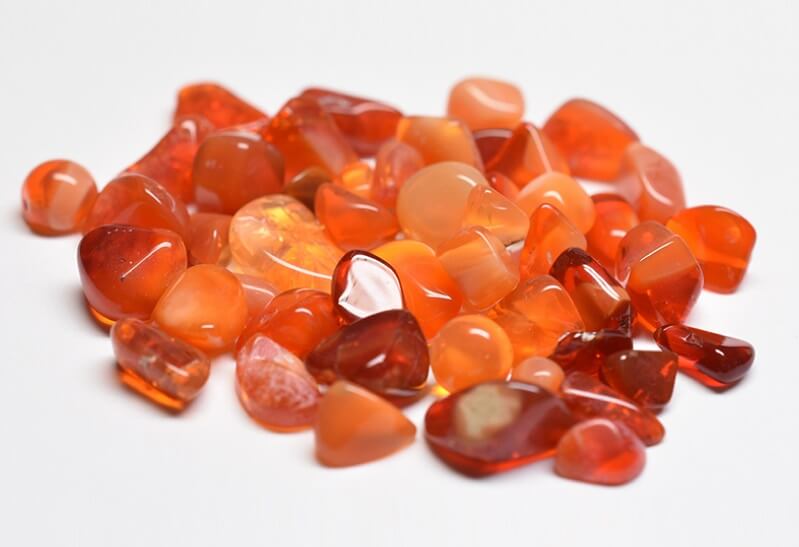
7. Carnelian — For Getting Started Again
Carnelian is the Sacral chakra stone of creativity and courage. It is said to restore appetite for life — for making things, for moving your body, for the small pleasures that depression flattens. Try it when what you miss most is your own enthusiasm.
8. Black Tourmaline — For Protection And Boundaries
Black tourmaline is the classic protective stone, traditionally used to shield against draining environments and other people’s moods. If your low periods are made worse by an overwhelming home or workplace, it belongs by the door or in a pocket.
9. Clear Quartz — The Amplifier
Clear quartz is said to amplify the intention you set and the stones around it. It is the one crystal that makes every other crystal on this list work harder, and the natural centrepiece for a grid.

Four Gentle Ways To Use Them
The Two-Minute Palm Practice
- Choose one stone — rose quartz or amethyst are the kindest starting points.
- Sit anywhere, even on the edge of the bed, and rest it in your palm.
- Breathe in for four, out for six, six times. That is roughly one minute.
- Notice one physical thing: the stone’s weight, the cool of it, a stripe of colour.
- Put it back somewhere you will see it tomorrow.
That is the whole practice. It is deliberately small so it survives a bad day.
The Bedside Trio
Amethyst, lepidolite and rose quartz on the nightstand make a wind-down cue that requires no willpower — you simply see them when you plug in your phone. Add a smoky quartz if you wake feeling heavy.
A Simple Support Grid
Place clear quartz in the centre of a small tray with citrine, carnelian and sunstone around it, and set one honest intention — “a little more energy this week”. Our beginner crystal grid guide walks through the layout properly.

Wear Them
A bracelet or pendant keeps a stone with you without needing a single decision after you put it on. Many people find a rose quartz or amethyst bracelet the easiest entry point of all.
Crystals Are A Companion, Not A Treatment
This deserves saying plainly, because the wellness internet often will not. Depression responds to evidence-based care: talking therapies, medication where appropriate, sleep, movement, sunlight and connection. Crystals sit alongside those things as ritual and comfort, in the same category as a favourite mug or a candle lit at the same hour each evening. Used that way they are lovely. Used as a replacement for care, they are harmful.
If you notice low mood lasting more than two weeks, losing interest in things you used to enjoy, or any thoughts of harming yourself, please talk to a doctor or a crisis line today.
How To Cleanse And Care For Your Stones
Crystal tradition holds that stones working with heavy emotion benefit from regular clearing. Moonlight on a windowsill overnight is the gentlest method and safe for every stone here. Selenite plates, sound, and smoke from sage or palo santo are also popular — see our full guide to cleansing your crystals.
- Never soak lepidolite, selenite or malachite — water damages them.
- Amethyst, rose quartz and citrine fade in direct sunlight; charge them in the shade or by moonlight.
- Smoky quartz and black tourmaline are the two most people re-cleanse most often, since they are used for absorbing.
Where To Buy Crystals For Depression
Look for sellers who name the mineral and its origin, and be wary of dyed or coated stones sold as rare varieties. Our guide to where to buy healing crystals covers what to check. If you would rather start with a curated set than choose stone by stone, a beginner box is the simplest route:
- Tumbled amethyst — the best single stone to start with.
- Lepidolite tumbles — soft, lilac and calming to hold.
- A beginner crystal kit — usually includes quartz, amethyst and rose quartz together.
Frequently Asked Questions
Which crystal is best for depression?
Amethyst is the most widely recommended, because it supports the sleep and mental quiet that low mood erodes. If self-criticism is the loudest part for you, rose quartz is often the better first stone.
Can crystals replace antidepressants or therapy?
No. There is no evidence crystals treat depression, and stopping prescribed treatment can be dangerous. Use them as a complementary ritual and keep your medical care in place.
How long should I hold a crystal?
One to five minutes is plenty. Consistency matters far more than duration — a daily two minutes beats a rare half-hour.
Should I sleep with a crystal under my pillow?
Many people do, though a nightstand or bedside dish is safer and just as effective within the practice. Avoid sharp points and raw clusters in the bed.
How do I cleanse a crystal used for heavy emotions?
Moonlight overnight, a selenite plate, or smoke cleansing. Do it whenever the stone feels dull to you — most people land on roughly once a month.
Do crystals work if I do not believe in them?
Crystal healing is a belief-based tradition, and the benefit people report comes largely from the attention and ritual involved. Approach it as a mindfulness aid you happen to find beautiful and it works on its own honest terms.
A Final, Gentle Word
Choose one stone. Put it somewhere you will see it. Hold it for two minutes tomorrow. That is the entire ask, and on a hard day it is more than enough. Meanwhile, keep the people and the professionals in your corner — the stones are there to sit alongside them, never instead of them.
If you would like to go further, read our guides to calming crystals for anxiety, crystals for grief and meditating with crystals.
Crystal healing is a traditional practice, not a medical treatment. Nothing here replaces advice from a qualified health professional.