
Exam season has its own particular flavour of stress: too much to learn, too little time, and a brain that suddenly finds the laundry fascinating. Crystals will not read the textbook for you — but a small stone on your desk can become a surprisingly effective ritual for starting, staying and settling.
In crystal tradition, certain stones are said to support clear thinking, memory, motivation and calm nerves. This guide covers the ten best-loved crystals for studying and exams, exactly where to put them, a study-session ritual, an exam-day plan, and honest advice on what stones can and cannot do.

Can Crystals Really Help You Study?
Let us be straightforward: there is no scientific evidence that crystals improve memory or grades. What they do offer is a physical cue — a small object that marks the start of focused work and the end of it. Habit research is clear that consistent cues help; a stone you pick up before every session is a good one.
Think of your study crystals as a companion to the boring fundamentals: sleep, spaced repetition, short breaks and a tidy desk. If you want the reasoning behind crystal practice in general, our guide to how healing crystals are said to work explains it in more depth.
The 10 Best Crystals For Studying And Exams
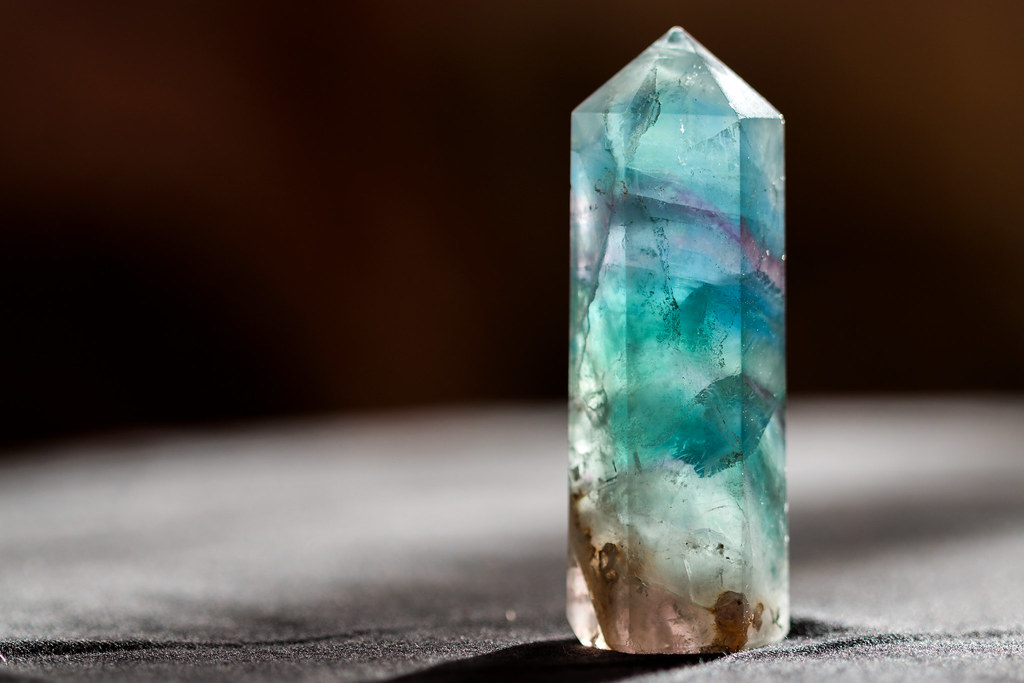
1. Fluorite — the Genius Stone
Fluorite earned the nickname “the Genius Stone” precisely for this use case. It is said to organise scattered thinking and turn overwhelm into an ordered list — the stone for the moment you have six subjects and no plan.
Use it: keep a fluorite piece next to your planner. Hold it while you write your session plan, then set it on the corner of your desk while you work.
2. Clear Quartz — the amplifier
Clear quartz is the all-purpose stone, believed to amplify whatever intention you set with it. For study, it is the one you programme with a single sentence: “one hour, one chapter, no phone.”
Use it: place a clear quartz point aimed toward your notes, and treat it as a visual timer — while it is upright, you are working.

3. Amethyst — calm concentration
Amethyst is the classic stone for a quieter mind. Where fluorite sorts your thinking, amethyst is said to lower the volume of anxiety about the exam so you can actually absorb the material.
Use it: a cluster on the bookshelf for the room, and a tumbled piece in your pocket for the exam hall (if permitted).

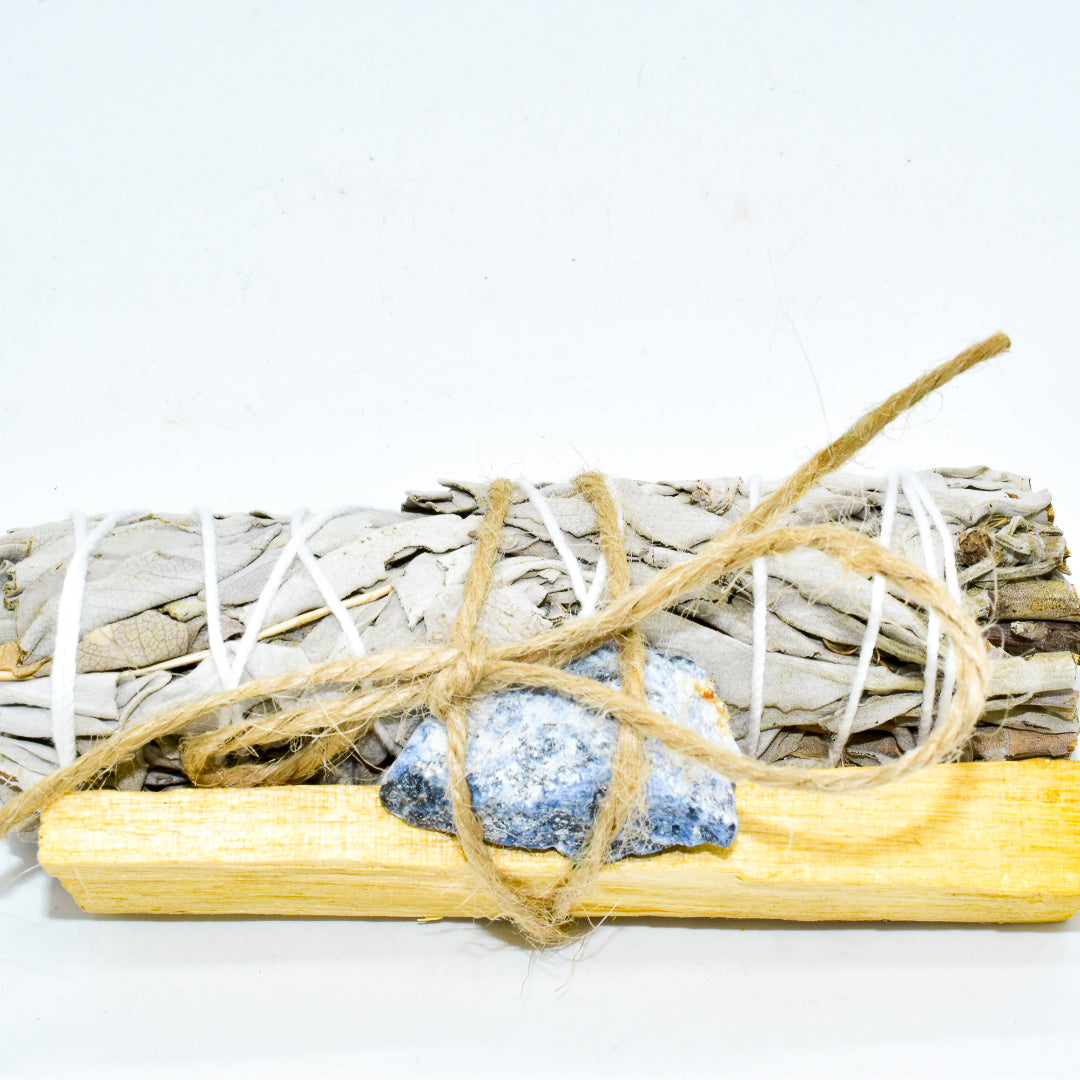
4. Sodalite — the stone of logic
Deep blue with white veining, sodalite is traditionally called the stone of logic and rational thought. It is linked to the Throat and Third Eye chakras and recommended for subjects that demand structured reasoning — maths, law, science.
Use it: hold it while you talk yourself through a problem out loud. Explaining aloud is one of the best-evidenced study techniques there is; sodalite makes it feel like a ritual instead of a nuisance.
5. Lapis Lazuli — memory and truth
Lapis lazuli was the stone of scribes and scholars in the ancient world, and crystal lore associates it with memory, clarity and honest self-assessment — including the honesty to admit which topic you have been avoiding.
Use it: set lapis on top of the notes for the topic you like least, and study that one first.
6. Tiger’s Eye — determination
Tiger\u2019s eye is the stone of steady courage. It is the one to reach for when the problem is not understanding the material but starting at all.
Use it: keep it in your pencil case as a portable pep talk before a test.

7. Citrine — motivation and optimism
Sunny citrine is associated with confidence, energy and optimism. Long revision stretches drain morale, and citrine is the traditional antidote to “what is the point.”
Use it: place it where the light hits your desk in the morning and make it your first-thing-in-the-day stone.

8. Pyrite — willpower against procrastination
Pyrite’s metallic gold cubes look like tiny building blocks, and crystal tradition treats it as a stone of willpower, action and follow-through. It is the anti-procrastination stone.
Use it: put pyrite on your phone. Literally — set the stone on top of your face-down phone during a study block so moving it is a conscious choice.

9. Hematite — grounding for long sessions
Heavy, mirror-grey hematite is prized for grounding and endurance. It is a favourite for the third hour of revision, when everything starts floating.
Use it: hold one in each hand, feet flat, three slow breaths, then back to the page.
10. Green Aventurine — the lucky stone for exam day
Green aventurine is known as the Stone of Opportunity, and it is a long-standing good-luck charm for tests and interviews. It is also gently calming rather than energising, which is exactly what exam-day nerves need.
Use it: keep it in your pocket on exam morning, and hold it for ten seconds before you turn the paper over.

How To Set Up A Study Crystal Grid
A grid is simply an intentional arrangement. For study, keep it small and out of the way of your notes:
- Choose one focus stone (fluorite or sodalite) for the centre of your desk.
- Place clear quartz above it, pointing toward you, to amplify the intention.
- Put citrine on your dominant-hand side for motivation and amethyst on the other for calm.
- Add pyrite in front of your phone or laptop as the boundary marker.
- Say your session intention once, out loud, then start a 25-minute timer.
If you want the fuller method, our guide to crystals for your workspace covers desk placement in detail, and crystals for focus goes deeper on concentration specifically.
A 90-Minute Study Ritual
- Clear the space (2 min). Tidy the desk, water within reach, phone face-down under pyrite.
- Set the intention (1 min). Hold fluorite, name the single outcome: “I will finish the practice questions for chapter 4.”
- Work in three sprints (25 min each). Two five-minute breaks; stand up, look out a window, no scrolling.
- Recall, don’t reread (10 min). Hold sodalite and explain the topic aloud from memory.
- Close the loop (2 min). Move the focus stone off the desk to mark the session finished, and write the one thing you will start with next time.
Crystals For Exam Day And Test Anxiety
Exam nerves are a different problem from revision focus. On the day, choose calming and confidence stones over stimulating ones: green aventurine for luck, amethyst or other calming crystals for anxiety for a racing pulse, and confidence crystals such as tiger’s eye or carnelian if self-doubt is the loudest voice.
- Check your school’s rules first — some exam halls do not allow objects on the desk. A stone in a pocket is usually fine.
- Choose a small tumbled stone with no sharp edges.
- Use it as a breathing anchor: hold, exhale slowly for six counts, begin.
- Do not save it for the exam only. A stone that has been part of every study session carries the association with it.
Where To Buy Study Crystals
You do not need all ten. Start with two: one for focus and one for calm. Reliable starting points are tumbled fluorite, sodalite, a clear quartz point and a small green aventurine for exam day. Look for sellers who name the stone and its origin, and be wary of glassy “rainbow quartz” or uniformly bright dyed stones. Our guide to where to buy healing crystals covers what to check before you order.
How To Cleanse Your Study Crystals
Crystal tradition suggests cleansing stones that absorb stress — and revision stones absorb plenty. Leave them on a selenite plate overnight, set them under the full moon, or use the smoke-free options in our guide to cleansing crystals without palo santo. Keep fluorite and lapis away from water — both are soft and porous. A good rhythm is to cleanse at the end of each exam block, as a small ceremony of being finished.
Frequently Asked Questions
What is the best crystal for studying?
Fluorite is the traditional first choice — the “Genius Stone” is associated with clear, organised thinking. Sodalite is the pick for logical subjects and clear quartz for general focus.
What crystal is good for exams?
Green aventurine, the Stone of Opportunity, is the classic exam-day charm, usually paired with amethyst for nerves and tiger’s eye for confidence.
Which crystal helps with memory?
Lapis lazuli and fluorite are the stones most often linked to memory and mental clarity in crystal tradition. Neither replaces active recall and spaced repetition, which genuinely work.
Where should I put crystals while studying?
Within sight but not in the way: the top corner of the desk, on your notebook, or in a pocket. The point is that you see or touch the stone as you begin.
Can I take a crystal into an exam?
Often yes, if it stays in your pocket — but check your institution’s rules first. Anything on the desk may be treated as unauthorised material.
How many crystals should a student have?
Two or three is plenty: one for focus, one for calm, one for motivation. A crowded desk defeats the purpose.
Do crystals help you concentrate?
There is no scientific evidence that they do. What helps is the routine they support — a clear cue to start, a phone put away, and a defined block of work.
Study Smarter, With A Little Ritual
The most useful thing a study crystal does is mark a boundary: this is study time, and this is when it ends. Choose one stone, keep it where you work, and let it become the small signal your brain learns to trust. If you are just beginning, our guide to starting a crystal collection will help you pick your first few pieces — and good luck with your exams.
This article shares traditional crystal healing beliefs for informational purposes only. Crystals are not a substitute for effective study methods, medical advice, or support for exam-related anxiety — please speak with a teacher, counsellor or doctor if stress is affecting your wellbeing.