
One of the most vivid blues on earth once lined the eyelids of Egyptian queens and the robes of saints on cathedral ceilings. That stone is lapis lazuli — the crystal tradition calls the “Wisdom Keeper.” So what is lapis lazuli, where does its blue come from, and why has it been treasured for more than 6,000 years?
This guide covers the mineralogy, the history, the spiritual meaning, the chakra connections, how to use lapis lazuli in practice, how to care for a stone that dislikes water, and how to tell a real piece from a dyed imitation.
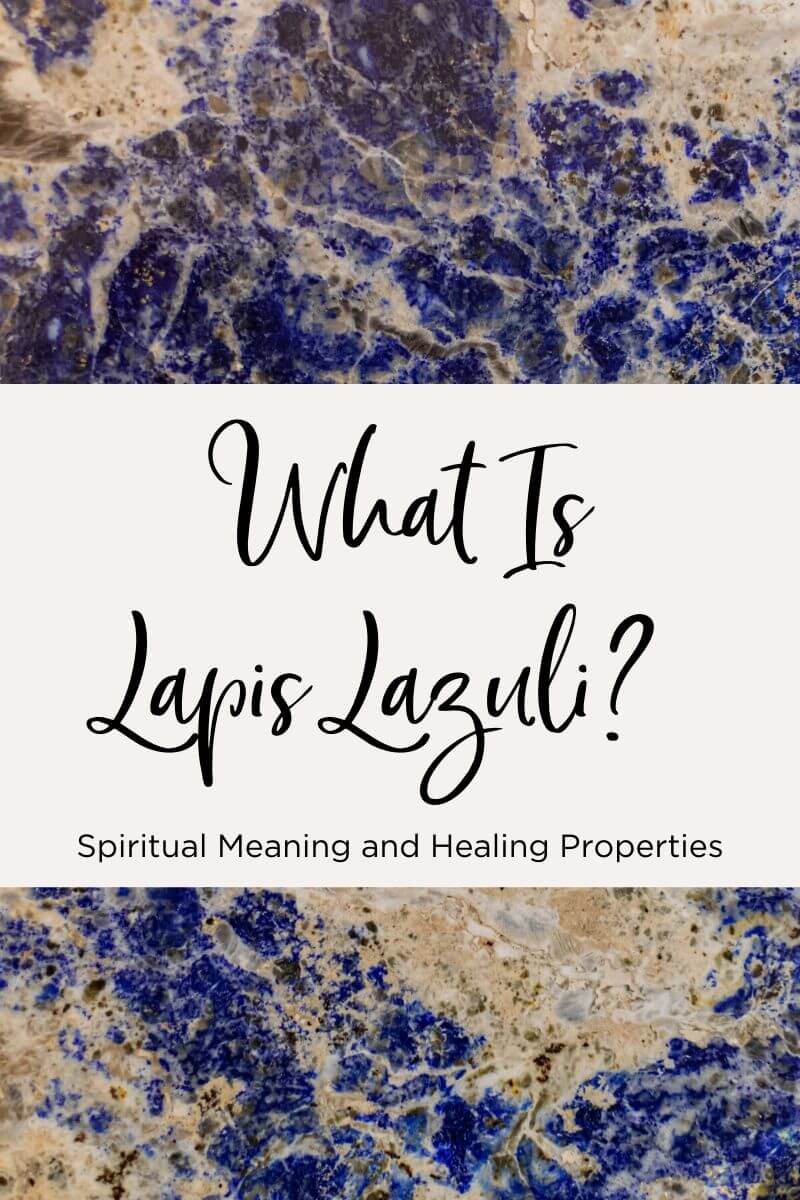
Lapis Lazuli At A Glance
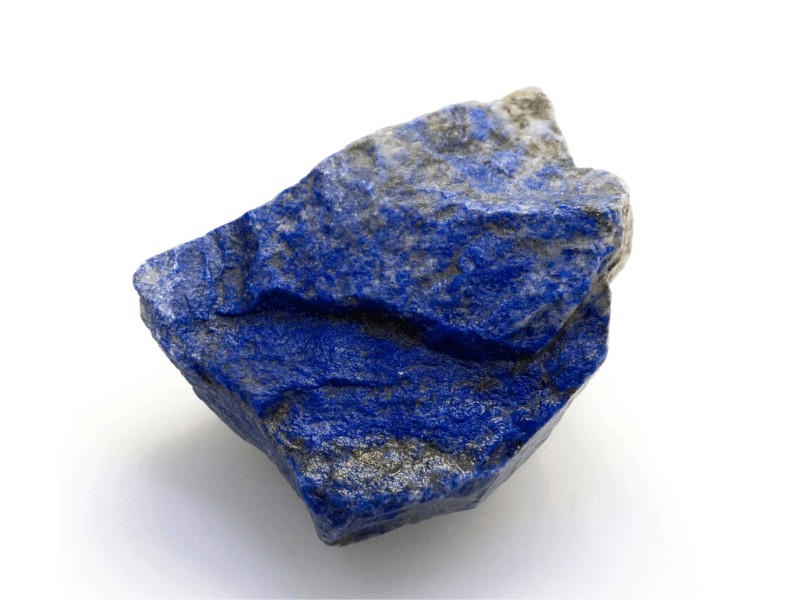
- Colour: deep royal to indigo blue, often with gold pyrite flecks and white calcite veining
- Composition: a rock, not a single mineral — mostly lazurite with calcite, pyrite and sodalite
- Hardness: 5–5.5 on the Mohs scale (softer than quartz — scratches easily)
- Chakras: Throat and Third Eye
- Zodiac: Sagittarius, with Libra and Capricorn also traditionally linked
- Element: Water and Air
- Said to support: truthful speech, wisdom, intuition, self-knowledge
- Main sources: Badakhshan in Afghanistan (the historic and finest source), plus Chile and Russia
Is Lapis Lazuli A Crystal Or A Gemstone?
Technically, lapis lazuli is a rock — an aggregate of several minerals rather than a single crystal with one lattice. The blue comes from lazurite, a blue silicate that forms when limestone is transformed by heat and pressure deep in the earth’s crust. The golden sparkles are pyrite (fool’s gold), and the pale grey-white streaks are calcite.
Collectors prize a rich, even indigo with fine gold flecks and minimal calcite. But a stone with visible white veining is no less genuine — in fact, it is often a helpful sign that you are not looking at dyed jasper or reconstituted powder.

The 6,000-Year History Of Lapis Lazuli
Mesopotamia and ancient Egypt
Lapis was mined in the mountains of Afghanistan and traded thousands of kilometres to Sumer and Egypt as early as the fourth millennium BCE. It appears in the burial goods of Ur, in the funeral mask of Tutankhamun, and in scarab amulets carved for protection. Ground into powder, it was worn as eye cosmetic — a tradition often attributed to Cleopatra.
Ultramarine and the Renaissance
From the 14th century, European painters ground lapis into ultramarine, the most expensive pigment ever used — literally worth more than gold by weight. That is why the Virgin Mary’s robes are blue in so many masterpieces: the colour itself signalled reverence and expense.
The stone of rulers and scribes
Across cultures, lapis was associated with truth, judgement and the heavens. Its speckled blue was read as the night sky studded with stars, making it a natural symbol for divine wisdom passing into human hands.
What Is The Spiritual Meaning Of Lapis Lazuli?
In crystal tradition, lapis lazuli is the stone of inner truth. It is said to help you recognise what you actually think and feel — and then find the words for it. Where softer blue stones like blue lace agate soothe, lapis is believed to sharpen: it is the stone of honest conversations rather than easy ones.
It is also considered a stone of self-knowledge. Practitioners use it in journalling and shadow work, on the belief that it lifts what has been buried to the surface where it can be examined kindly.
Lapis Lazuli Healing Properties
Emotional
Lapis is said to support honesty, boundaries and released resentment — the feelings that build up when you keep swallowing what needs saying. Many people pair it with rose quartz so that truth is spoken with warmth rather than heat.
Mental
Traditionally regarded as a stone of clear thinking and memory, lapis is a common study companion alongside fluorite and other crystals for focus. It is believed to help you organise thoughts before you speak them.
Spiritual
Lapis is used to deepen meditation and intuition. Placed on the brow, it is said to open the higher chakras and quiet the noise that sits between you and your own inner guidance.
Physical (traditional beliefs)
Folk practice has long associated lapis with tension headaches, throat and voice complaints, and restful sleep. These are traditional beliefs only — lapis lazuli is not a medical treatment, and any persistent symptom deserves a doctor rather than a stone.

Lapis Lazuli And The Chakras
Lapis lazuli is one of the few stones that works strongly with two chakras at once. It is associated with the Throat chakra — expression, honesty, being heard — and with the Third Eye, the centre of intuition and perspective. If you feel unheard or unclear, this pairing is exactly why lapis is recommended.
To use it in a full layout, place lapis at the base of the throat and a second piece on the brow, then work outward with the other stones in our guide to the order chakra stones go in.
Lapis Lazuli Zodiac Connections
Lapis is the traditional stone of Sagittarius, whose love of truth and big-picture thinking it is said to amplify — see our Sagittarius crystal guide for the full set. Libra is thought to benefit from its clarity in decision-making, and Capricorn from its steady wisdom.
Crystal Pairings For Lapis Lazuli
- Lapis + amethyst — for meditation and dream work; two Third Eye stones together.
- Lapis + carnelian — the ancient Egyptian pairing; courage plus clear speech.
- Lapis + selenite — clearing and recharging without water.
- Lapis + clear quartz — said to amplify whatever intention you set.
- Lapis + tiger\u2019s eye — wisdom paired with grounded confidence before a big conversation.
How To Use Lapis Lazuli
Meditation and intention
Sit comfortably, hold the stone in your palm or rest it on your brow, and follow your breath. Speak one clear intention aloud — lapis is a stone of voice, so saying it matters. Our guide to meditating with crystals has a longer script if you are new to this.
Before hard conversations
Hold lapis while you rehearse what you need to say, then keep it in your pocket during the conversation. Many people describe it as a reminder to stay honest and calm rather than defensive.
Journalling and shadow work
Place the stone at the top of the page and write without editing for ten minutes. Finish by naming one truth you had been avoiding, and one small action it asks of you.
Wearing it
A pendant at the throat keeps lapis exactly where its tradition places it. Because it is soft, choose settings that protect the stone and remove jewellery before showering or swimming.
How To Cleanse And Care For Lapis Lazuli
Lapis is porous and only 5–5.5 on the Mohs scale, so keep it away from water, salt, harsh light and household cleaners — soaking can dull the polish and loosen the calcite. Cleanse it with sound, moonlight, selenite or the smoke methods in our guides to smudging with sage and cleansing crystals without palo santo. Never make gem water with lapis.
How To Spot Fake Lapis Lazuli
- Too perfect a blue. Uniform, flat colour with no calcite and evenly scattered “gold” glitter usually means dyed howlite, jasper or reconstituted powder.
- Colour on your skin or cloth. Rub the stone with a damp white cloth — dye transfers.
- Warm, light and plasticky. Real lapis feels cool and dense; resin composites feel light.
- Suspiciously cheap large pieces. Fine Afghan lapis is not a bargain-bin stone.
- Watch the names. “Denim lapis” is genuine but pale and calcite-rich; “Swiss lapis” and “German lapis” are dyed jasper, not lapis at all.
When you are ready to buy, look for sellers who state the origin and show unedited photos. Popular options include tumbled lapis lazuli stones, a lapis palm stone for meditation, or a lapis pendant worn at the throat. Our guide to buying crystals covers what to check before you order.

Frequently Asked Questions
What is lapis lazuli good for?
In crystal tradition it is used for honest self-expression, wisdom, intuition and clear thinking. It is the stone people reach for before conversations that matter.
Which chakra is lapis lazuli?
Primarily the Throat chakra, and strongly the Third Eye as well — a rare stone that bridges expression and insight.
Can lapis lazuli go in water?
No. It is soft and porous, and contains calcite and pyrite that react badly to moisture. Use dry cleansing methods, and never drink water a lapis stone has sat in.
Who should wear lapis lazuli?
Anyone working on speaking up: teachers, writers, negotiators, or anyone who tends to go quiet under pressure. Sagittarius is its traditional zodiac match.
Is lapis lazuli expensive?
Small tumbled stones are inexpensive. Fine, deeply saturated Afghan lapis with even colour commands much higher prices — and drives a busy trade in dyed imitations.
How can I tell real lapis lazuli?
Look for natural variation: uneven pyrite flecks, some calcite veining, a cool dense feel, and no dye transfer onto a damp white cloth.
Speak Your Truth With The Wisdom Keeper
From Sumerian tombs to the Sistine Chapel, lapis lazuli has always been the stone of things worth saying. Keep a piece where you will pick it up — desk, pocket, bedside — and let it be your cue to think clearly and speak honestly. If you are building a wider collection, our guide to starting a crystal collection is a good next stop.
This article shares traditional crystal healing beliefs for informational purposes only. Lapis lazuli is not a medical treatment and should not replace advice from a qualified healthcare professional.
Comments are closed.