
If you have ever seen a statue of the Buddha with fingers gently touching, or a yoga teacher resting thumb and forefinger together in meditation, you have seen a mudra. These simple hand gestures have been part of Hindu, Buddhist and yogic practice for well over two thousand years — and they pair beautifully with healing crystals.
In this guide we explain what mudras are, where they come from, how to practise them safely and comfortably, and which crystals are traditionally matched with eight of the most popular mudras.

What Are Mudras?
Mudra is a Sanskrit word usually translated as “seal,” “gesture” or “mark.” A mudra is a symbolic position of the hands (and sometimes the whole body) used during meditation, breathwork, prayer, dance and ritual. In yogic thought, each finger is linked to one of the five elements — thumb to fire, index to air, middle to space, ring to earth and little finger to water — and joining fingers in different ways is said to balance those elements and direct the flow of prana, or life energy.
Whether or not you take the energetic explanation literally, mudras work wonderfully as a focus tool. Holding a deliberate gesture gives your hands something to do, signals to your body that it is time to settle, and anchors a specific intention.
A Brief History of Mudras
Mudras appear in ancient Indian sculpture, in the hand positions of classical Indian dance such as Bharatanatyam, and throughout Buddhist art, where each gesture of the Buddha carries meaning — teaching, fearlessness, enlightenment, giving. As Buddhism spread, mudras travelled into Tibetan, Chinese and Japanese practice; Japanese Shingon Buddhism has an especially rich mudra tradition. Hatha yoga texts later described mudras as advanced practices for directing energy, and modern yoga brought the simpler hand mudras to studios worldwide.
Why Combine Mudras With Crystals?
Crystal tradition and mudra practice share the same idea: a physical object or gesture can hold an intention. Resting a tumbled stone in an open palm, or between joined fingertips, adds a tactile anchor and a visual reminder. Many people find a smooth stone makes a mudra easier to hold for longer, and it is a natural way to bring your crystals into chakra meditation.
How to Practise a Mudra (Step by Step)
- Sit comfortably with a long spine — on a cushion, chair or bed. Relax your shoulders.
- Cleanse your chosen crystal and hold it for a moment while you set an intention.
- Form the mudra gently. Use light pressure — fingertips should touch, not press.
- Rest the backs of your hands on your thighs or knees, or hold the mudra at your heart.
- Breathe slowly through your nose. Begin with 3–5 minutes and build towards 15.
- Release the gesture slowly, shake out your hands and notice how you feel.
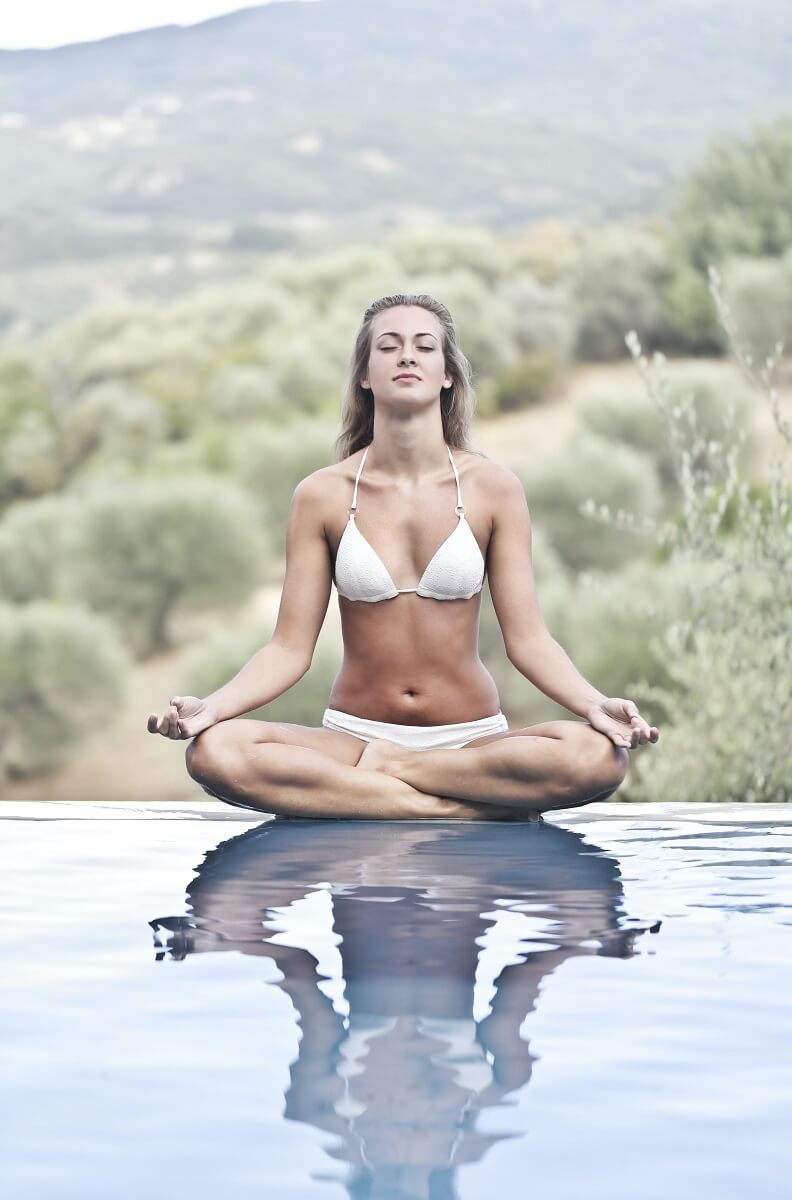
8 Popular Mudras and Their Crystal Pairings
1. Gyan Mudra (Mudra of Knowledge)
How: Touch the tip of the thumb to the tip of the index finger; extend the other fingers. Palms up for receptivity, down for grounding.
Traditionally associated with: Focus, calm and wisdom. It is the classic meditation mudra.
Crystal pairing: Clear quartz in the open palm, said to amplify focus. See clear quartz meaning.
2. Prithvi Mudra (Earth)
How: Touch the tip of the ring finger to the tip of the thumb.
Traditionally associated with: Grounding, stability and steadiness during unsettled times.
Crystal pairing: Smoky quartz or red jasper, both linked to the root chakra.
3. Anjali Mudra (Salutation)
How: Press the palms together at the heart, fingers pointing up — the familiar prayer or namaste position.
Traditionally associated with: Gratitude, respect and returning to the heart.
Crystal pairing: A small rose quartz between the palms. See rose quartz meaning.
4. Dhyana Mudra (Meditation)
How: Rest the right hand on top of the left in your lap, palms up, thumb tips touching to form an oval.
Traditionally associated with: Deep concentration and stillness; seen on many seated Buddha statues.
Crystal pairing: Amethyst resting in the cupped hands. See amethyst meaning.
5. Abhaya Mudra (Fearlessness)
How: Raise the right hand to shoulder height, palm facing outward, fingers up.
Traditionally associated with: Courage, protection and dispelling fear.
Crystal pairing: Black tourmaline held in the resting left hand. See black tourmaline.
6. Hakini Mudra (Mind)
How: Bring all ten fingertips together in front of the chest, palms apart, like a dome.
Traditionally associated with: Memory, concentration and clear thinking — popular before study or work.
Crystal pairing: Fluorite or lapis lazuli on your lap. See lapis lazuli.
7. Shuni Mudra (Patience)
How: Touch the tip of the middle finger to the tip of the thumb.
Traditionally associated with: Patience, discipline and emotional steadiness.
Crystal pairing: Howlite, a traditionally calming stone. See howlite meaning.
8. Padma Mudra (Lotus)
How: Join the heels of the hands, little fingers and thumbs, and spread the other fingers wide like an opening flower.
Traditionally associated with: Openness, compassion and new beginnings.
Crystal pairing: Green aventurine or rhodochrosite in the cup of the hands. See green aventurine.
If you want stones that suit all eight, a tumbled chakra crystal set gives you one stone per energy centre.
A 10-Minute Mudra and Crystal Routine
- Minute 0–2: Anjali mudra with rose quartz. Name one thing you are grateful for.
- Minute 2–5: Prithvi mudra with smoky quartz in your lap. Feel your weight on the floor.
- Minute 5–9: Gyan mudra, clear quartz in one palm. Breathe in for four, out for six.
- Minute 9–10: Dhyana mudra, eyes closed, simply rest.
Pair the routine with a spoken intention from our 10 mantras for crystal healing for an even richer practice.

Mudras by Intention: A Quick Guide
- For calm and stress relief: Dhyana or Shuni mudra, paired with amethyst or howlite.
- For focus before work or study: Hakini or Gyan mudra, paired with fluorite or clear quartz.
- For grounding when anxious or scattered: Prithvi mudra, paired with smoky quartz or red jasper.
- For courage before a hard conversation: Abhaya mudra, paired with black tourmaline or tiger’s eye.
- For self-compassion and gratitude: Anjali or Padma mudra, paired with rose quartz or rhodochrosite.
Feeling anxious specifically? Our guide to calming crystals for anxiety suggests more stones to try with Prithvi and Dhyana mudra.
Mudras and the Chakras
Modern teachers often link individual mudras to the seven chakras, which makes them a natural companion to a chakra crystal layout. Prithvi mudra is commonly associated with the root chakra, Padma and Anjali with the heart, Hakini with the third eye, and Gyan with the crown. A simple way to combine them is to lie down with one stone on each chakra and hold the mudra that matches the area you most want to focus on. Our guide to what order chakra stones go in shows the full layout.
You do not have to follow these pairings strictly. Many experienced practitioners simply choose the gesture that feels most natural on a given day and let the crystal act as a reminder of the intention they set at the start.
Common Mudra Mistakes
- Pressing too hard. Tension defeats the purpose; a feather-light touch is enough.
- Holding too long too soon. Start with a few minutes; aching hands are distracting.
- Slumping. A tall, relaxed spine matters more than perfect finger placement.
- Treating it as a cure. Mudras are a contemplative practice, not a medical therapy.
- Ignoring the tradition. Mudras are sacred in living religions — practise with respect and curiosity.
Choosing Crystals for Mudra Practice
Smooth tumbled stones or small palm stones (about 3–4 cm) are easiest to hold during a mudra. Avoid sharp points and fragile clusters. Keep them in a pouch with your meditation cushion, and cleanse them regularly using one of the methods in how to cleanse your crystals. Well-reviewed crystal palm stones are a comfortable option.
Frequently Asked Questions About Mudras
What are mudras used for?
Mudras are used in meditation, yoga, prayer and dance to focus attention and express an intention. In yogic tradition they are believed to balance the elements and direct prana.
How long should you hold a mudra?
Begin with 3–5 minutes. Traditional teachers often suggest building up to 15–45 minutes a day, which can be split into shorter sessions.
Can you do mudras without meditating?
Yes. Many people hold Gyan or Shuni mudra while commuting, listening to music or waiting — any moment you want to pause and breathe.
Which mudra is best for beginners?
Gyan mudra is the simplest and most widely taught. Anjali mudra is also easy and familiar.
Do I need crystals to practise mudras?
No. Mudras are complete on their own. Crystals are an optional extra that many people enjoy as a tactile anchor.
Are mudras religious?
Mudras come from Hindu and Buddhist traditions and remain sacred in them. Many people practise them as a secular mindfulness tool; doing so respectfully and with awareness of their origins is the best approach.
Crystal healing is a complementary wellness practice rooted in tradition and personal belief. The properties described here are not scientifically proven and are not a substitute for professional medical or mental health care. If you are struggling, please speak to a qualified professional.