
Money is one of the few subjects that can make a calm person tense in about four seconds. Should you be saving harder, investing sooner, charging more, spending less? The advice is endless and contradictory, and most of it skips the part that actually stalls people: the feeling that money is something that happens to you.
That is where prosperity stones have always earned their place. This guide is about money specifically — cash flow, business, savings, asking for more — and how crystal tradition is used alongside the practical work. If you want the broader, everyday kind of fortune instead, read our companion guide to crystals for good luck.

An honest disclaimer first
Crystals do not make money. They do not raise your salary, find clients or beat the market, and no stone has ever paid an invoice. What they are traditionally used for is attention: a pyrite cube on your desk or a citrine in your wallet is a physical reminder of a financial intention you have set, at the exact moment you are about to spend, price, or decide. Used that way — alongside a budget and real effort — a money stone is a genuinely useful ritual object. Used instead of those things, it is decoration.
The 9 best crystals for wealth and prosperity
1. Pyrite — the stone of the decisive earner

Pyrite is iron sulphide, and it grows in near-perfect brass-coloured cubes that look manufactured. Prospectors called it fool’s gold; crystal tradition calls it the stone of confident action, which in money terms usually means raising your rate, sending the quote, or finally asking for the review you are owed.
Where people put it: a pyrite cube on top of a stack of invoices, beside the till, in the desk drawer where the contracts live. Keep it bone dry — pyrite rusts and can crumble if it sits in water or damp. Never soak it and never make gem water with it. It pairs naturally with our crystals for career success list.
2. Citrine — the Merchant’s Stone
Citrine is the best known money crystal in the modern West, and the nickname is old: shopkeepers were said to keep a piece in the cash box, which is where “the Lucky Merchant’s Stone” comes from. It is a golden quartz coloured by trace iron, and it is associated with optimism, visibility and generosity — the mood in which selling is easy rather than mortifying. Full details in our citrine meaning guide.
Buyer’s note: a large share of bright orange “citrine” on the market is heat-treated amethyst. It is still quartz and still lovely, but natural citrine is a paler, smokier yellow. Ask the seller.
3. Green aventurine — the Stone of Opportunity

Green aventurine is quartz shot through with fuchsite mica, which gives it that soft green shimmer. It is the stone traditionally reached for at the start of things: a new business, a new product, a first invoice. Its reputation is for favourable outcomes and for softening the fear of financial risk. More in our green aventurine guide.
4. Jade — prosperity as something you keep

Jade has been carved for over 5,000 years and in Chinese tradition it stands for longevity, virtue and fortune together. Where citrine is about the incoming, jade is about the enduring: wealth that is built and held rather than won. It is a good stone for savings goals and long-horizon plans.
Two minerals go by the name: jadeite and nephrite. Dyed serpentine and quartzite are widely sold as “new jade” or “Malaysia jade”, so buy from a seller who names the mineral.
5. Tiger’s eye — the money-discipline stone
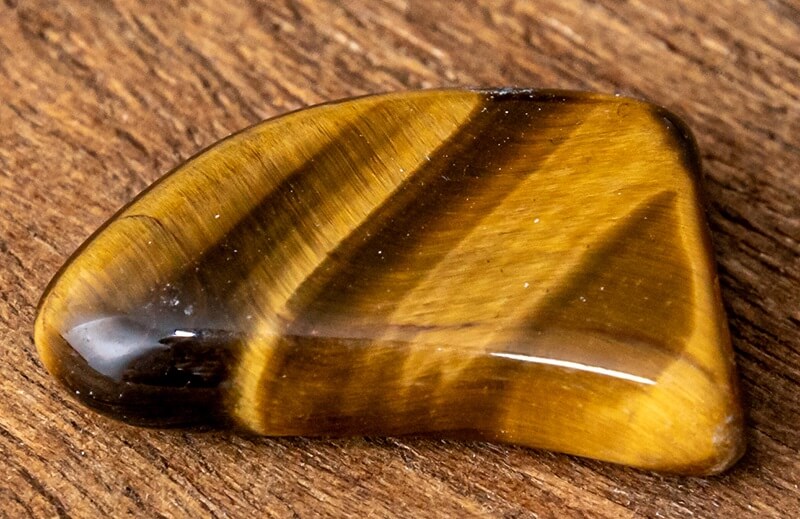
Tiger’s eye is the stone for the unglamorous half of wealth: sticking to a plan, not panic-buying, not panic-selling. Its silky band of light (chatoyancy) has long linked it to clear sight and steady nerve. Our tiger’s eye meaning guide goes deeper.
6. Malachite — for financial stagnation
Rich banded green malachite is the stone of transformation, and it is traditionally used when money feels stuck — the same rate for five years, the same overdraft every month. Use polished pieces, keep it away from water and dust, and read the safety notes in our malachite guide before you handle raw material.
7. Garnet — commitment and follow-through
Deep red garnet was a merchant’s and traveller’s stone along the old trade routes. In prosperity work it is associated with staying power: finishing the project, honouring the contract, going back for the second attempt after a refusal.
8. Amazonite — the negotiation stone
Almost every pay rise, contract and client price lives or dies in a conversation. Amazonite, a blue-green feldspar, is the traditional stone of calm, honest speech and boundaries — useful when you have to say a number out loud and not immediately discount it. See our amazonite guide.
9. Clear quartz — the amplifier

Clear quartz carries no money story of its own; it is the stone said to strengthen whatever intention it sits with, which is why it anchors nearly every prosperity grid. Our clear quartz guide explains the wider quartz family.
Where to put money crystals (this is most of the practice)
- Wallet or purse — one small tumbled citrine or aventurine, so you see it every time you pay
- Cash box or card machine — pyrite or citrine, the shopkeeper’s tradition
- Desk, left of your screen — pyrite for pricing, tiger’s eye for discipline (see best crystals for your workspace)
- With your paperwork — a jade or aventurine piece on the folder holding contracts or savings statements
- Wealth corner — in feng shui practice the far left corner from your front door is associated with abundance; a citrine cluster there is a very common placement
- Never in the car’s sun — citrine, amazonite and aventurine all fade in strong sunlight
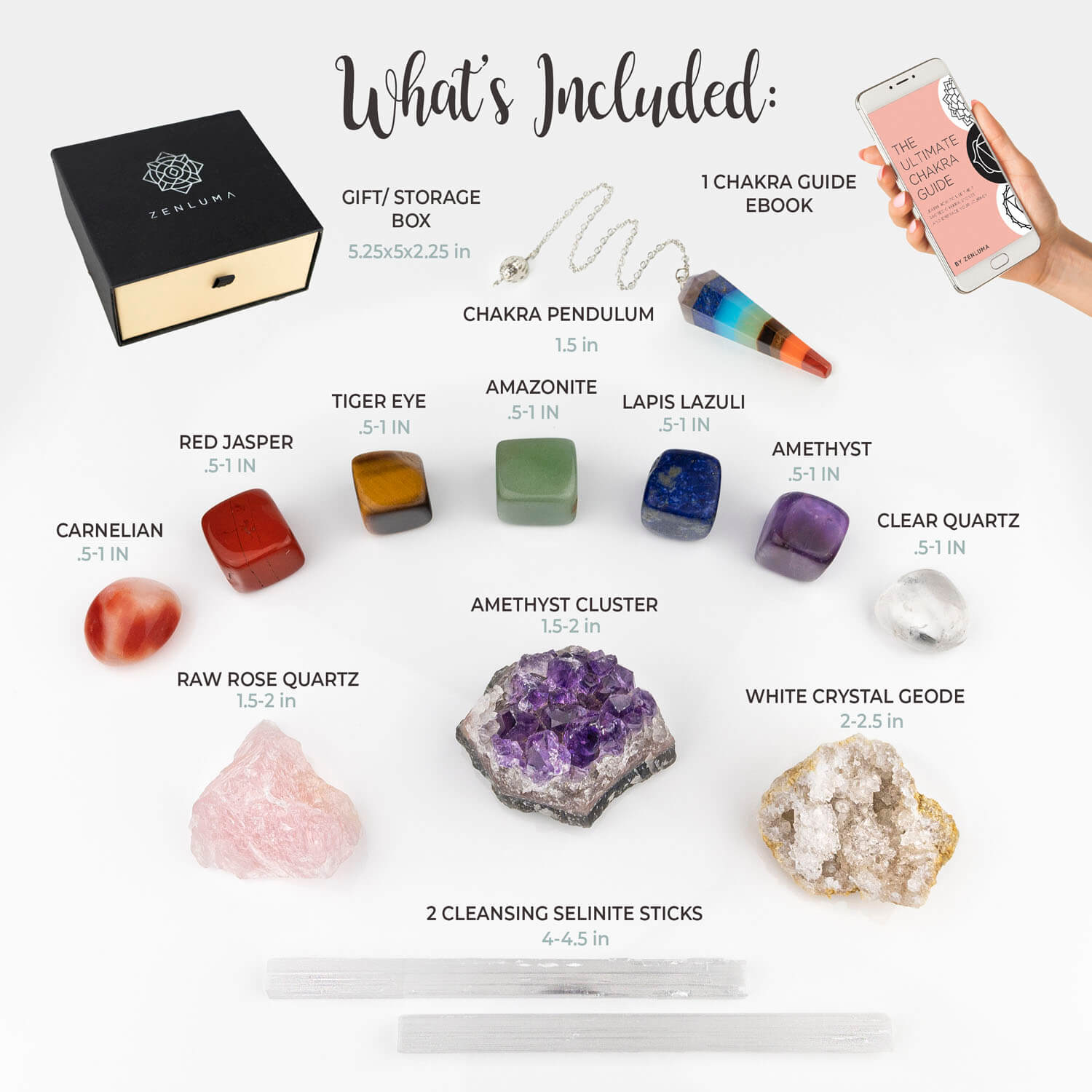
A prosperity grid you can set up in ten minutes
- Choose a flat surface you pass daily — a shelf, windowsill or the corner of your desk.
- Cleanse your stones first (here is how), then dry them.
- Place a clear quartz point in the centre, tip pointing away from you, as the amplifier.
- Set four stones around it: citrine (income), pyrite (action), green aventurine (opportunity), jade (keeping it).
- Write one specific financial intention on a slip of paper — a number and a date, not “more money” — and tuck it under the quartz.
- Add the practical step: the price you will raise, the transfer you will automate, the client you will email this week.
- Leave it for a lunar month, then reset it at the full moon and review honestly what moved.
If you run a business
Small business owners are the most enthusiastic users of prosperity stones, and the placements are wonderfully practical: citrine by the register, pyrite on the invoice pile, jade at the entrance, aventurine wherever new work comes in. Treat them as a ritual bookend to the money tasks you dislike — chasing a late payment, reviewing your prices, opening the spreadsheet. Pair with our crystals for confidence list before a pitch.
Money mindset: the part the crystals are really working on
- Name the actual fear. Most money anxiety is a specific, nameable scenario. Say it out loud and it shrinks.
- Know your numbers once a week. Fifteen minutes with your accounts beats a year of vague worry.
- Price like you would for a friend’s business. Most people undercharge for themselves and advise others correctly.
- Separate spending guilt from spending decisions. One is useful information, the other is noise.
- Use the stone as a cue, not a charm. Touch it, then do the task. The same logic as our manifesting guide.
Caring for prosperity stones
Water-safe: quartz family (citrine, clear quartz, tiger’s eye), jade, garnet — a quick cool rinse and a proper dry. Keep dry: pyrite (rusts), malachite (copper-bearing, and dust is not something to breathe), amazonite (porous, fades). Salt scratches and dulls soft stones, so skip salt soaks. Wallet stones get scuffed, which is fine, but keep them away from harder stones in the same pouch. New to all of this? Start with crystals for beginners.
Frequently asked questions about crystals for wealth
What is the strongest crystal for money?
Citrine is the most widely used money stone in modern Western practice and pyrite runs a close second. Neither is “strongest” in any measurable sense — pick the one whose job matches yours: citrine for income and visibility, pyrite for decisive action.
Where should I keep a money crystal?
Somewhere you see it during money moments: wallet, till, desk, or on the folder holding your accounts. Placement matters more than size, because the whole effect depends on you noticing it.
Can crystals attract money on their own?
No, and it is worth saying plainly: there is no scientific evidence that crystals influence income. They are used as focus and ritual objects. Every real gain still comes from pricing, work, saving and time.
Which crystal is best for saving money?
Jade and tiger’s eye are the traditional pair — jade for wealth that lasts, tiger’s eye for the discipline to leave it alone. Many people keep one with their savings paperwork or in the drawer with the card they are trying not to use.
Can I put a crystal in my wallet?
Yes, and it is the single most popular money placement. Choose a small tumbled stone with no sharp points, and expect it to pick up scratches over time.
Do I need to cleanse money crystals more often?
Stones you handle daily benefit from a monthly cleanse, and many people also cleanse after a stressful financial week. Citrine and clear quartz are often said to need it less, but there is no harm either way.
Is green jade or green aventurine better for wealth?
They do different jobs in tradition: aventurine is for the opening — new ventures, opportunities, first steps — and jade is for holding and growing what already exists. Plenty of people keep both.
What is the difference between wealth crystals and luck crystals?
Money work is specific and practical: wallets, prices, budgets, business. Luck work is broader and opportunity-shaped. Citrine and pyrite appear on both lists, but if you want the wider version see our crystals for good luck guide.
The quiet truth about prosperity stones
The people who get the most from money crystals are not the ones expecting a windfall. They are the ones who put a citrine in the wallet, felt slightly braver about their prices, and then actually raised them. Keep the stone. Do the admin. That combination is where the change lives.
Crystal healing is a spiritual and cultural tradition, not a medical or financial service. Nothing on this page is financial advice. For significant money decisions, speak to a qualified professional. Looking for stones? See where to buy healing crystals. As an Amazon Associate we may earn from qualifying purchases.