
Most of us spend more waking hours at a desk than anywhere else. If that desk feels cluttered, tense, or strangely draining, a handful of stones will not fix your workload — but a small, deliberate arrangement of crystals can give you something surprisingly useful: a physical cue to slow down, breathe, and reset your attention.
That is how crystals earn their place in a workspace. They are traditional focus objects, not machines. Below are the nine stones most often chosen for desks, where to put them, and a few honest notes about what they can and cannot do.

Why keep crystals on your desk at all?
In crystal tradition, stones are said to hold steady, characteristic energies — and placing one where you work is believed to keep that quality within reach through a long day. Modern practice adds a second, more down-to-earth reason: a stone you can pick up becomes an anchor. Turning a cool piece of fluorite over in your hand for thirty seconds between tasks is a small ritual that interrupts autopilot.
You will also see claims online that crystals “absorb” or “block” electromagnetic radiation from screens, routers, and phones. There is no scientific evidence for that, and it is worth saying plainly. The International Agency for Research on Cancer classifies radiofrequency electromagnetic fields as “possibly carcinogenic” (Group 2B) — a category that reflects limited evidence and ongoing research, not a proven danger from your laptop. Keep a stone on your desk because you like it and it steadies you, not because you have been told it is a shield.
If screen fatigue is the real issue, the boring fixes work best: a break every hour, a window to look out of, and enough sleep. A crystal can be the reminder that prompts the break.
The 9 best crystals for your workspace

1. Fluorite — for mental clarity
Nicknamed the Genius Stone, fluorite is the classic desk crystal. It is said to tidy scattered thinking and help you hold one thread at a time, which is exactly what a day of notifications erodes. Green and purple fluorite are the usual choices for study and planning work.
Where to put it: directly beside your keyboard, within easy reach. Fluorite is soft (Mohs 4) and fades in strong sun, so keep it out of a hot window.
2. Clear quartz — for amplifying intention
Clear quartz is traditionally called the master healer and an amplifier: whatever intention you set at the start of the day, quartz is believed to hold it. It is also the most practical stone to own, because a single point works in any arrangement.
Where to put it: at the back of the desk, point facing you, as the centre of a small grid.
3. Black tourmaline — for grounding a noisy room
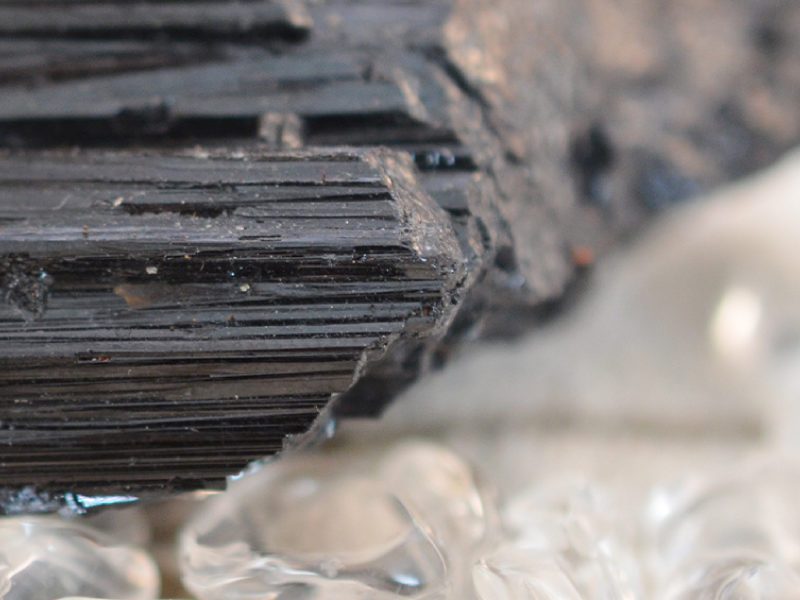
Black tourmaline is the stone people reach for when a workplace feels chaotic or a particular colleague leaves them frayed. It is said to ground and to give a sense of a boundary around your own space — useful in open-plan offices and busy kitchens-turned-offices alike.
Where to put it: between you and the door, or one piece at each corner of the desk.
4. Shungite — the traditional “tech” stone
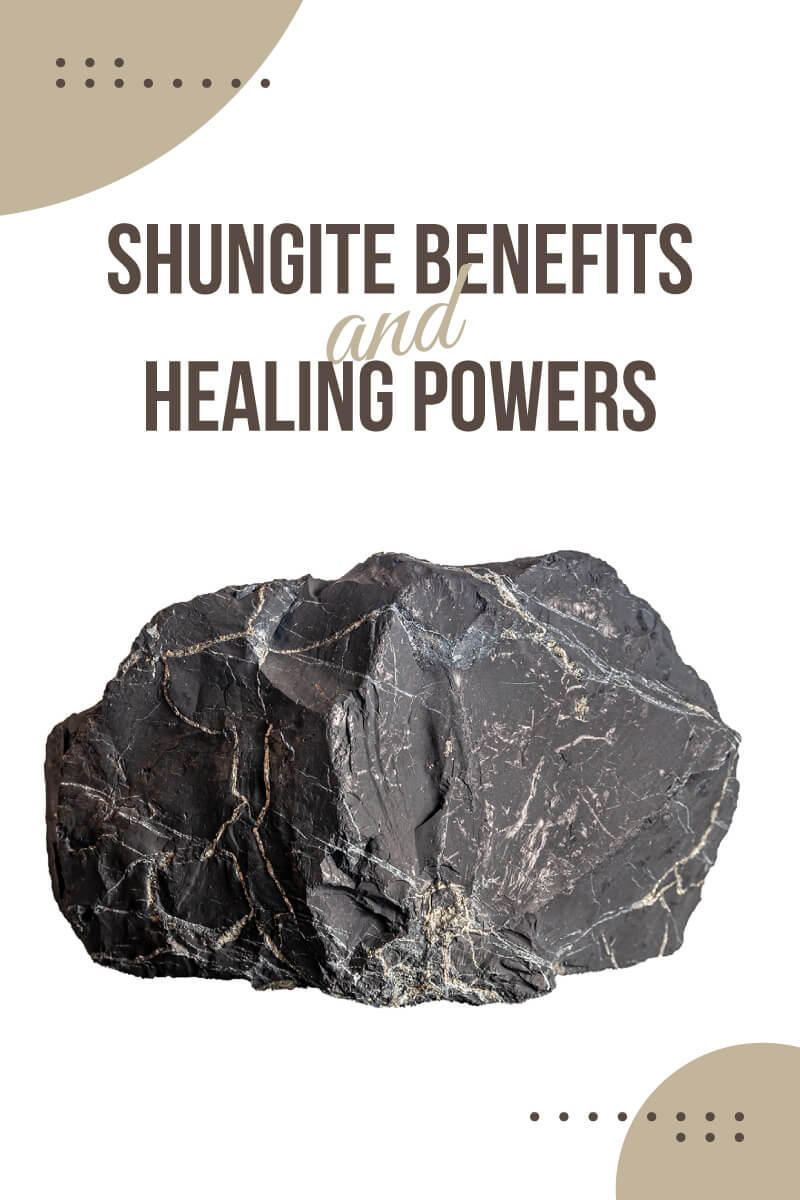
Shungite is the stone most associated with computers and phones, largely because of its unusual carbon structure. Its reputation as an EMF shield is folklore rather than fact, but it is a genuinely grounding, quietly heavy stone to keep near a monitor, and plenty of people like it for that alone.
Where to put it: beside the monitor stand or at the base of your laptop. Unpolished shungite can leave a grey residue — keep it off paperwork.
5. Pyrite — for confidence before you hit send
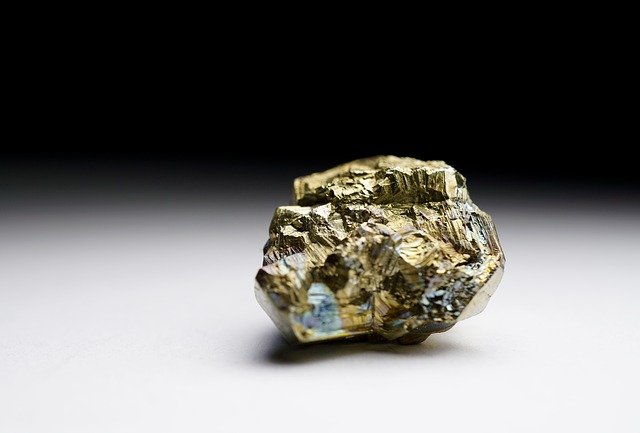
Fool’s gold has always been linked with abundance and nerve. Pyrite is said to firm up your resolve when you are about to ask for something — a rate rise, a deadline extension, a bigger brief. It is a favourite of freelancers for exactly that reason.
Where to put it: in the top-left corner of the desk, the traditional “wealth corner” in feng shui practice. Pyrite rusts, so keep it dry.
6. Citrine — for warmth and momentum

Citrine carries a sunny reputation: optimism, creative momentum, and the kind of energy that gets a first draft written. It suits desks in dim rooms and afternoon slumps.
Where to put it: wherever daylight hits — though note that genuine citrine fades with long sun exposure, so a bright shelf beats an all-day windowsill.
7. Tiger’s eye — for follow-through
Tiger’s eye is the stone of practical courage. Where citrine starts things, tiger’s eye is said to help you finish them and to keep a level head under pressure. Its chatoyant golden bands are also lovely to look at while you think.
Where to put it: in a pocket on presentation days, or in a bowl you pass on the way to your chair.
8. Amethyst — for calm in a tense office
Amethyst is the steady, soothing presence on a desk. It is traditionally used to settle a racing mind and take the edge off frustration — helpful if your working day involves difficult conversations.
Where to put it: to your left, near where you rest your hand while reading. A cluster works beautifully as a visual break.
9. Amazonite — for saying the hard thing well
Amazonite is the throat-chakra stone of honest, unruffled communication. Writers, managers, and anyone who lives in email find it a natural desk companion — it is said to help you say what you mean without heat.
Where to put it: beside your phone or headset.
How to arrange a desk crystal setup

Three or four stones beat a crowded desk every time. A simple arrangement that works:
- An anchor stone within arm’s reach — fluorite or amethyst — that you actually touch during breaks.
- A grounding stone at the far corner nearest the door — black tourmaline or shungite.
- A momentum stone in your line of sight — citrine or pyrite — so it catches your eye when you look up.
- A quartz point at the back, aimed toward your chair, as the centrepiece.
Keep everything on a small dish or wooden tray so the setup reads as intentional rather than cluttered, and so you can lift it in one movement when you clean.
A two-minute desk reset
Use this between meetings, or whenever you notice you have re-read the same sentence three times.
- Push the keyboard away and pick up your anchor stone.
- Breathe in for four, hold for four, out for six — three rounds, eyes on the stone, not the screen.
- Name the one task you are returning to. Out loud if you can.
- Set the stone down in the same place every time. That repetition is what turns it into a cue.
If you want to make it more deliberate, read our guide to setting intentions with crystals and pick one intention for the week rather than one per day.
Crystals for specific work problems
- Cannot concentrate: fluorite, sodalite, hematite — see our full guide to crystals for focus.
- Nervous before speaking: amazonite, blue lace agate, lapis lazuli.
- Imposter feelings: confidence stones such as carnelian, tiger’s eye, and pyrite.
- Ambition and promotion: our list of crystals for career success goes deeper on goals.
- Anxious chest, tight jaw: calming crystals for anxiety, plus a real break.
- Money stress: crystals for wealth and prosperity.
Keeping desk crystals clean
Desk stones collect dust, hand cream, and coffee. Wipe them weekly with a dry cloth, and cleanse them energetically about once a month — full instructions in our guide to cleansing crystals. Quick version:
- Safe in water: quartz, amethyst, citrine, tiger’s eye, black tourmaline (dry immediately).
- Never in water: selenite, fluorite, pyrite, malachite — use smoke, sound, or a selenite plate instead.
- Fades in sun: amethyst, citrine, fluorite, rose quartz — moonlight or shade is safer.
Frequently asked questions
Do crystals really block EMF from computers?
No. There is no evidence that any stone blocks or absorbs electromagnetic fields from your devices. Shungite and black tourmaline are traditionally kept near screens, and many people find them grounding, but treat that as folklore and personal preference rather than protection.
How many crystals should I keep on my desk?
Three or four. Beyond that they stop being focal points and start being clutter, which defeats the purpose.
Which crystal is best for working from home?
Black tourmaline at the edge of the desk is the most common choice, because the hardest part of home working is marking a boundary between work and the rest of the house. Pack the stones away at the end of the day and the boundary becomes physical.
Can I keep crystals in a shared or open-plan office?
Easily — a single tumbled stone in a pocket or a small tray beside the monitor reads as a desk ornament. If you would rather be discreet, a crystal bracelet keeps the stone with you without announcing it.
Where should crystals go according to feng shui?
In feng shui practice the far-left corner of the desk is associated with wealth and the far-right with relationships and support. Citrine or pyrite left, rose quartz right, and something grounding nearest the door is a common layout.
Should I cleanse a crystal someone gave me for my desk?
Yes — tradition holds that a new or gifted stone should be cleansed before use, so it starts with your intention rather than its history. Smoke or a night on selenite is enough.
Do crystals help with work stress?
They can support a routine that helps — pausing, breathing, resetting. They are not a substitute for fixing an unmanageable workload, and if stress is affecting your sleep or health, talk to your doctor.
Start small
Pick two stones, not nine. Fluorite for clarity and black tourmaline for grounding will cover most working days, and you can add a third when you know what your desk actually needs. New to all of this? Our beginner crystal guide and how to start a crystal collection are the natural next reads.
Crystal healing is a traditional practice, not a medical treatment. Nothing here is intended to diagnose, treat, or replace professional medical or mental health care. If work stress is affecting your health, please speak to a qualified professional.